Boo: Take a drive through a haunted mine
Take a drive through a haunted mine
HANCOCK — “A Haunted Drive Thru at the Mine,” awaits the brave and adventurous from Thursday, Oct. 29-31, at the Quincy Mine ruins, according to a release from Bethany Jones of the Michigan Tech Department of Visual and Performing Arts.
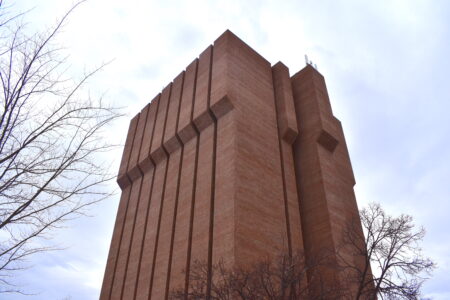
The Michigan Tech Theater and the Quincy Mine Association have partnered to present the spectacularly spooky DRIVE THRU Halloween experience at the ruins of the Quincy Mine, near the former Quincy Mining Company’s Number 2 shaft, which reached a depth of 9,200 feet on its incline.
“We’ve got a multi-layered project in the works,” said Kent Cyr, Assistant Professor, and technical director at Michigan Technological University, “with built and lit scenic elements out in the mine ruins, and original scary podcasts/stories produced by the Tech Theater Company.”
Sounds will play on a long loop broadcast over a low-power FM radio transmitter, he added. As people drive the runis along the marked path, they can tune their radios to the “Haunted Mine Drive-Thru Halloween Podcast.”
For those seeking a paranormal experience, the Quincy Mine, particularly near the Number 2 Shaft, just may be the place! Many men were killed in the Number 2 shaft since sinking it began in 1856, on the Pewabic amygdaloid copper lode.
Just one example comes from a disaster that occurred on Oct. 30, 1927, in which seven men were killed when an air blast wrecked part of the shaft they were repairing damage in the shaft caused by a mine fire. The accident occurred on the 41st level of the shaft, about 4,300 feet below the surface. All seven men were married and left families. The names of the victims are:
George Williams, Arvid Nosko, John Israelson, Ernest Schilling, Emil Eittama, Henry Huzikoski, and John Covaleski.
Another example, listed in the Houghton County Mine Inspector’s Report for 1898 as Accident No. 19 occurred on July 6, when Dennis O’Brien fell from the 33rd level of the No. 2 shaft, striking midway between the 37 and 28th level, a distance of 350. He was greasing a pulley in the shaft when he fell.
Accident No. 20, in the same year, occurred on July 23, when miner Timothy O’Neal was killed at the 43rd level, south of the No.4 shaft, when a piece of vein rock broke away from the hanging wall and fell on him.
In 1910, on the north side of the No. 7 shaft, on the 270 level, Frank Paterni, an Italian immigrant miner, was working as a “chute man,” when he fell into a moving rock skip. It was not determined if he died and fell in, or if he fell in and died.
Mining was never categorized as a “safe” occupation, not at the Quincy or any other mine.
But of the (known) men killed in the Quincy Mine, all bodies were recovered, and received proper burial. But that does not ensure, however, that they have moved on. Perhaps some of them still linger, still roam the area of the mine in which they were so violently and quickly killed. There is only way to find out for sure.
Guests will proceed through the ruins on top of Quincy Hill at their own pace, but beware — Triple-A can’t help you here! To join in the spooky fun, a $10 per car donation is suggested to support the VPA program and the Quincy Mine Hoist Association.