Women’s History Month: Reynolds-Anderson, a woman of firsts
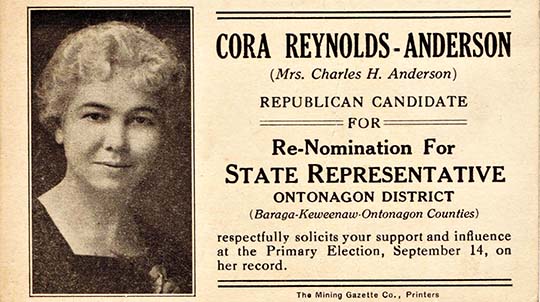
Mining Gazette file photo An ad for Cora Reynolds-Anderson’s reelection bid as it appeared in the Daily Mining Gazette.
Cora Reynolds-Anderson was the first woman elected in the Michigan House of Representatives. A member of the Ojibwa tribe, Anderson was born in L’Anse in 1882 and attended local public schools.
After completing her teaching degree at the Haskell Institute in Lawrence, Kansas, Anderson returned to the U.P. and taught at the Zeba Mission in Baraga County. In the early 1920s, she organized the first local public health service and brought a public health nurse to the region. In 1925, Anderson ran for the Michigan House of Representatives and was the first Native American woman in the country to serve in a state legislature. According to MichiganWomenForward (miwf.org), while in the House of Representatives, Anderson concentrated on public welfare issues and chaired the Industrial Home for Girls Committee. She was particularly interested in public health issues, especially the fight against alcoholism and tuberculosis.The National Park Service states that she also championed the recognition of Native American fishing rights on Huron Bay.
In recognition of her contributions, in 2001 the Michigan Women’s Hall of Fame wrote, “At a time when minorities, including Native Americans, were subjected to considerable economic and social discrimination, Anderson’s determination to attend college and return the benefits of her education to her community was notable. Her role as educator, legislature and public health reform leader aided the Native American community as well as the whole of society.”