
Detroit Casinos 2025: From June Slump to October Bounce in the Shadow of Online Growth
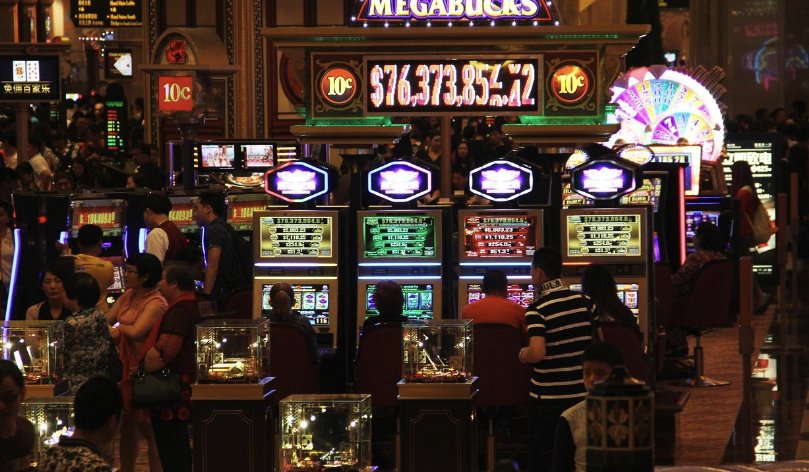
Detroit’s three commercial casinos generated just over 107 million dollars in October 2025, extending a year of softer results for the city’s land-based industry and raising fresh questions about how much room there is for growth on the casino floor.
New figures from the Michigan Gaming Control Board show MGM Grand Detroit, MotorCity Casino, and Hollywood Casino at Greektown reported 107.4 million dollars in total October revenue, including table games, slot machines, and retail sports betting. Table games and slots accounted for 105.9 million dollars, while retail sportsbooks contributed 1.5 million dollars, lifting the city out of a weaker run of months but not enough to erase a year of small declines in land-based play.
June Low-Point to October Recovery
As reported by BonusFinder, back in June, the same three casinos reported 101.04 million dollars in total revenue, the softest monthly figure since February. The MGCB report showed that 100.38 million dollars came from table games and slots, a 4 percent decline compared with June 2024 and an 11 percent drop from May, leaving first half 2025 table and slot revenue 0.8 percent lower than in the equivalent period a year earlier.
Through the summer, the pattern shifted without fully breaking the trend. August revenue climbed to 106.9 million dollars, with 105.7 million dollars from table games and slots, but year on year, those core numbers still fell 4.6 percent and remained 1.2 percent lower on a January to August comparison.
September then underlined how fragile the recovery remained. The three casinos generated 98.9 million dollars that month, of which 98.2 million dollars came from tables and slots. That represented a 3 percent decline from September 2024 and a 7.1 percent drop from August, leaving combined table and slot revenue down 1.4 percent for the year to date.
October’s bounce changes the tone but not the basic trajectory. MGCB figures show table and slot revenue up 2.2 percent year on year in October and 7.9 percent higher than in September, yet from January through October, the same measure is still 1.1 percent lower than in the first ten months of 2024.
MGM, MotorCity, and Hollywood in a static market
MGM Grand Detroit remains the city’s largest casino by some distance. In June, it held close to half of the market and reported 48.43 million dollars in table and slot revenue. Its numbers improved through late summer and into autumn, reaching about 52.7 million dollars in October, a gain on both September and October 2024 that underlines its position at the top of the local rankings.
MotorCity Casino has followed a quieter line. June table and slot revenue came in just over 30.6 million dollars. August delivered a modest lift to a little above 31 million dollars before the property eased back to roughly 30.5 million dollars in October. The figures suggest a steady second place in Detroit rather than a push for a larger share of the market.
Hollywood Casino at Greektown has carried the sharpest swings. June’s 21.32 million dollars in table and slot revenue marked its lowest point of 2025 and a clear drop from June 2024. August brought an improvement to just under 23 million dollars. By October, Hollywood’s casino revenue sat around 22.7 million dollars, slightly ahead of the same month last year and back within its usual range after the mid-year slump.
Market shares have shifted only at the margins. The most recent MGCB reports place MGM at roughly 49 percent of Detroit casino revenue, MotorCity at 29 percent, and Hollywood at 22 percent, almost unchanged from the splits recorded in June.
Tax Receipts and Retail Betting
The tax picture follows the same gentle moves. In June 2025, Detroit’s casinos paid about 8.1 million dollars in state gaming taxes and 11.9 million dollars in wagering taxes and development agreement payments to the City of Detroit. By October, those figures were closer to 8.6 million dollars for the state and 13.1 million dollars for the city, reflecting the stronger October performance but not a major shift in the overall flow of land-based gaming revenue into public budgets.
Retail sports betting remains a small piece of that puzzle. The casinos’ retail handle moved from just over 7.2 million dollars in June to around 13.5 million dollars in October, yet related tax payments stayed in the tens of thousands of dollars each month, a fraction of what table games, slots, and online gambling send to Lansing and City Hall.
Online Gaming Pulls Away from the Pack
In June, the MGCB reported that commercial and tribal internet gaming and internet sports betting operators produced 285.2 million dollars in gross receipts, with online casino products responsible for most of that total. Four months later, October’s online numbers moved decisively higher. The latest figures show 352.3 million dollars in gross receipts from iGaming and online sports betting combined, including a record 278.5 million dollars in iGaming gross receipts alone.
Adjusted gross receipts for October reached more than 310 million dollars across internet gaming and internet sports betting, producing around 58 million dollars in state taxes and payments. Detroit’s three commercial casinos sent a further 15 million dollars in wagering taxes and municipal services fees to the city from online activity, a sum that comfortably exceeds the contributions from their physical gaming floors.
Casino comparison brands such as BonusFinder, which track both retail and online performance, have highlighted the same divergence in their analysis of Michigan data, pointing to a maturing online market that has continued to expand even as Detroit’s casino floors hold within a narrow range. At the same time, the land-based sector remains a visible part of the city’s entertainment economy, with casino hotels, restaurants, and live events supporting jobs and visitor spending that do not appear directly in gaming revenue reports.
What the 2025 Pattern Suggests so Far
Taken together, the June and October reports frame 2025 as a year of limited movement at Detroit’s land-based casinos. A mid-year dip to just over 101 million dollars in June, followed by a recovery to 107.4 million dollars in October, has left table and slot revenue fractionally lower over the first ten months than in 2024, even as online operators set new records over the same span.
As of December 2025, the state’s regulated online market now routinely produces monthly gross receipts in the hundreds of millions, and record iGaming revenue in October has pushed that segment further ahead of Detroit’s land-based casinos in absolute terms. For regulators, operators, and city officials, the June slump and October bounce form part of a wider story in which the physical casino floor remains important to the city’s skyline, but increasingly shares the stage with a digital sector that sits at the centre of Michigan’s gambling economy.