
Overdose rates drop
Local counties’ overdose rate remains low
Trending
HANCOCK -- The Michigan Department of Health and Human Services (MDHHS) announced Tuesday the overdose death rate has declined by 47% since 2021. Preliminary data shows 16.4 deaths per 100,000 residents in 2025, four years ago the rate was 30.8.
Opioid overdoses are more common in other parts of the state, but according to Western U.P. Health Department Medical Director Dr. Robert Van Howe, it is still a pressing issue in areas such as the Keweenaw.
Van Howe said the overdose rate has gone down, mirroring the success with overdose prevention throughout the state.
"Fortunately, the frequency of opioid deaths is small enough that we don't get accurate numbers," he said. "But the overall impression is that the numbers are down across the region."
Van Howe said the health department, along with other agencies concerned with public health, meet for overdose death reviews and go over options to prevent cases from occurring again. If the amount of overdoses per time period are small enough per county/region, then the numbers are not released.
In the announcement, Chair of the Michigan Opioids Task Force, Dr. Natasha Bagdasarian, said the decrease is due to a concerted effort through MDHHS initiatives and through Governor Gretchen Whitmer.
"Michigan's progress did not happen by accident," she said. "It is the result of years of work to expand naloxone access, strengthen harm reduction services, improve real-time data, remove barriers to treatment and support people throughout recovery."
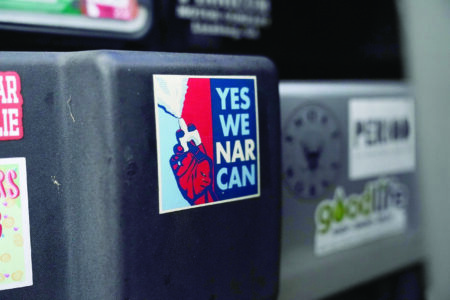
Naloxone is a life-saving overdose prevention medication. It can be used as someone is actively experiencing an opioid overdose in order to resuscitate them.
Van Howe said the expanded resources in the Keweenaw, an initiate multiple health departments in the state share, was key to getting numbers down and people treated.
"There are a couple things that we've done. One is the needle exchange program," he said. "As a part of that, we distribute Naloxone to direct people into a treatment program."
According to Van Howe, the health department did have a harm-reduction program in place, but the money for the program ran out. It had resources such as peer recovery coaching, which reached out to those struggling with addiction.
While not directly tackling the issue through a program like harm-reduction, Van Howe said he is hopeful the trend in decreasing overdoses continues.
"We're not gonna stop it completely. But we want them in a situation where they don't die from it," he said. "That's our lowest threshold -- is that we don't want people dying from it."