
Researchers head to Superior Maximus to investigate ‘zombie’ fish
Trending
The Michigan Department of Natural Resources and fish pathologists from Michigan State University will make an expedition aboard the RV Lake Char to Superior Maximus, the deepest point of Lake Superior this month, according to a June 8 statement from the DNR.
Superior Maximus is the nickname given to the deepest known point in the Great Lakes, located more than 35 miles offshore, north of Munising. Plunging roughly 1,332 feet beneath the surface, the area is in complete darkness with water temperatures around 39°F and immense pressure, more than 40 times more than on the surface.
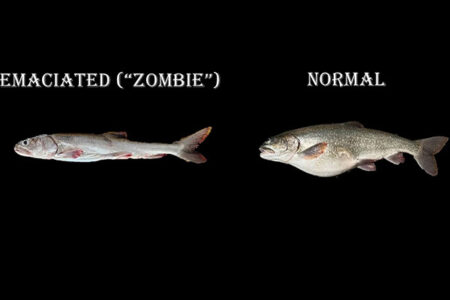
The purpose of the mission to investigate an emaciated siscowet lake trout. They are referred to as "zombie fish" because of their thin and undernourished bodies. They have increased in number in deep waters, sparking concern and interest from the public and scientists alike.
Lake trout in this zombie-like condition were discovered by a DNR fisheries research team during recent Lake Superior deepwater surveys of siscowet lake trout, says the DNR. Release. During the upcoming research expedition, the crew plans to investigate, and hope to rule out, the possibility of a fish pathogen causing the highly emaciated appearance of these lake trout. They also plan to collect more of these fish for thorough testing.
"Zombie" fish are not thought to have a contagious disease that they are spreading by biting other fish. Rather, their condition is believed to be a natural ecological phenomenon due to a lack of food in the deep waters in which they live. These extreme waters are prone to ecosystem shifts such as low food availability.
The phenomenon was observed only in the deepest parts of Lake Superior in Michigan inhabited by few species due to very low productivity and extreme conditions. Some have never been seen in their natural habitat, according to Great Lake Now.
The top predator, the siscowet lake trout, is a deepwater form of lake trout that is adapted to live in areas of the lake with very low food resources. In recent years, DNR researchers have documented an increase in the number of thin, zombie-like siscowet in offshore Michigan waters at the deepest parts of Lake Superior, from 600 feet to around 1,320 feet.
The overall incidence of "zombie" siscowet in deep water has risen from approximately 3% in 2015 to about 20% in 2024 and 2025. At Superior Maximus, 37% (11 fish) of siscowet captured in the 2024 survey were "zombies"; in 2025, 54% (15 fish) of those captured fell into this category.
After the Upper Lakes meeting of the Great Lakes Fishery Commission in March, at which DNR fisheries research biologist Shawn Sitar presented these findings, members of the public have expressed concern about the presence and prevalence of "zombie" fish in Lake Superior.
Researchers are carefully monitoring the populations of siscowet where these "zombie" fish have been found. The expedition to Superior Maximus this summer will help answer important questions about fish health that these fish have raised.
"While this trend is cause for further investigation," said Sitar, "it's not cause for alarm."
Monitoring fish populations and health in Lake Superior and the other Great Lakes is made possible by the DNR's fleet of research vessels, which are essential for monitoring ecosystem health by surveying fish in the largest bodies of freshwater in North America.