
Transforming the system
Questions raised about efficacy of rural healthcare options
Trending
HANCOCK -- The Michigan Department of Health and Human Services (MDHHS) is aiming to transform rural healthcare in Michigan through expansion of both in-person and online services. Finding healthcare in the U.P. has never been easy. Medical deserts have long existed in rural areas, primarily impacting the poorest of residents.
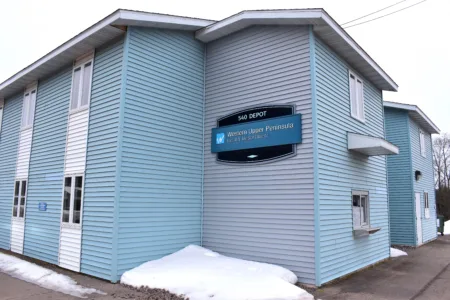
Western U.P. Health Department Medical Director Pete Baril said healthcare deserts impact not only those seeking care, but healthcare professionals, too.
"These issues cause obvious stress to the individuals who are experiencing [lack of] access to care, but can also affect the healthcare system and community by putting undue stress on emergency rooms and other aspects of the care system that would otherwise not see these patients," he said.
Aside from rural hospital closures, clinics within established hospitals have been closing in the U.P.
Aspirus Ironwood ended its maternal care last year. The closure sparked outrage from U.P. politicians, lambasting the closure and the effort to properly fund the clinic.
Additionally, Marquette saw a community member respond to the closure of its Planned Parenthood location. The clinic saw approximately 1,100 patients, providing IUDs, cancer screenings, medication and abortions.
MDHHS was awarded more than $173 million in federal funding for its Rural Health Transformation Program in Dec. 2025. In its June 2026 newsletter, MDHHS said it was allocating funding based on percentage of rural population in Michigan counties, including in traditionally metropolitan areas. It lists all of the U.P. counties as "fully rural."
Baril said the Health Department could see additional funding through these grants to help affected residents in its counties of operation.
"This program aims to improve rural healthcare through a variety of avenues including workforce development, provider recruitment and retention, transportation... These grants have various timelines, and are accessible to a range of healthcare entities," he said. "WUPHD is awaiting news on one such grant that will assist us with improving communication with the broader healthcare network and position us to be a stronger partner in the effort to improve healthcare access in the Western Upper Peninsula."
Two recent op-eds in Bridge Michigan looked at rural healthcare and the State of Michigan's attempt to expand it. In March, Michigan State Senator Jim Runestad (R-White Lake) said the lofty goals and lenient guidelines of the MDHHS will not give rural areas a fair shot if they are competing against population-dense areas such as Oakland, Saginaw, Ingham and Wayne Counties.
"Instead of targeting Michigan's many rural communities, which have a tremendous need for improved access and were originally intended to be the beneficiaries of these resources, bureaucratic formulas are stretched until nearly everyone qualifies," he wrote. "This creative accounting diverts money away from rural Michigan and allows major population centers to pilfer these resources and, once again, leave rural communities behind."
University of Michigan Assistant Professor Michael Shepard wrote the other op-ed, published in October 2025. He said funding these communities is one thing, but expanding healthcare jobs and opportunities will be the deciding factor in rural communities.
"Many of these workforce and access issues are most visible in the communities with Michigan's rural hospitals, especially in the Upper Peninsula and Northern Michigan," he wrote. "Despite significant existing workforce shortages, Health care is still the number one employer in roughly one-quarter of rural Michigan counties."
MDHHS sent a statement to The Gazette and stated it requested federal funding to strengthen rural hospital partnerships, recruiting more healthcare professionals, implementing modern technology and establishing digital care for rural residents.
"This funding opportunity is meant to transform the full spectrum of rural health care facilities, which include but are not limited to rural health centers, federally qualified health centers, emergency medical services, community mental health providers, private practice providers and hospitals," MDHHS said.
While not everyone is happy with the current state of rural healthcare, the uphill climb to improve it is finally getting its first legs.
MDHHS is currently seeking applicants for its Rural Healthcare Transformation Program grants. You can find more information on its michigan.gov webpage.