The waiting is the hardest part
CCISD anticipates state funding increases
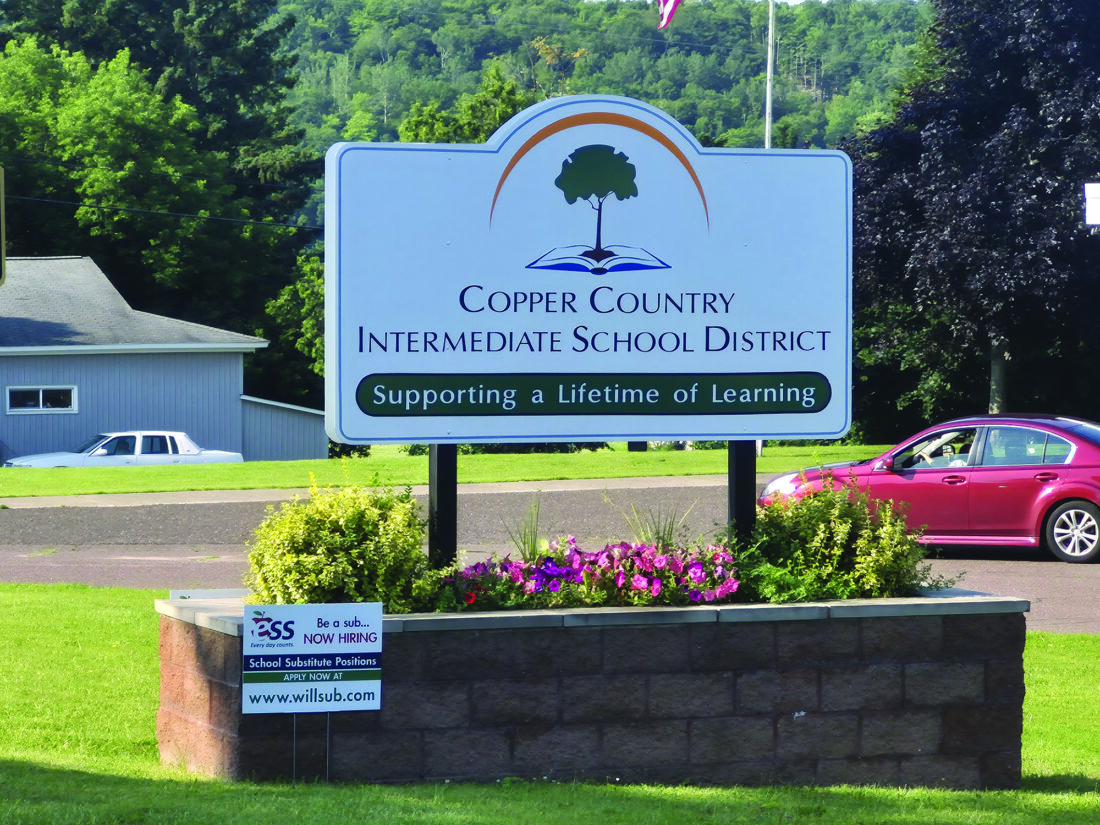
Graham Jaehnig/Daily Mining Gazette
HANCOCK – The Michigan legislature’s passage of the 2025-2026 state budget Friday included a $21.3 billion School Aid Budget, affecting the state’s 537 school districts, 285 public school academies, along with 56 intermediate school districts, including the Copper Country Intermediate School District (CCISD).
School aid funding increased by roughly $600 million over 2022-23. The K-12 school aid budget increased by more thabn $500 million and per-student funding rose to to $10,050, a record funding level.
David Sim, CCISD public engagement specialist, said although it is too soon to knew the full details of the budget’s contents, overall, there are a lot of things to like, but there are also some challenges to the CCISD.
Last Friday, Michigan Advance reported an additional $258 million for “at-risk” pupil support was included in the budget, as well as new reporting and accountability requirements for at-risk supports.
At-risk funding, as well as funding for English language learner support, each increased by 25%
The budget adds more than $169 million in funding for per-pupil mental health and school safety grants. It also provides $70 million in one time funding to improve career and technical education (CTE) in areas with limited programming.
Increasing student funding is always a positive, said Sim. There are funding increases in areas like breakfast and lunches, at-risk students, school safety, mental health, are good things.
At the same time, however, the Michigan Advance reported, the budget eliminated $100 million in district reimbursements for the Michigan Public School Employees’ Retirement System.
“There are positives and negatives in within the budget,” Sim said. “But I guess sometimes that’s compromise is within the government.”
Sims said there are certainly some things that could be better or changed, such as details on some of the categorical systems.
Categorical programs provide funding for specific needs, such as special education, at-risk students, and English language learners. These programs, funded through state and federal sources like the School Aid Fund and federal grants are restricted to particular uses, but help ensure resources are directed to well-defined priorities like early literacy, teacher training, and services for low-income students.
“It’s great that we’re recognizing that the state of Michigan has been underfunding schools,” Sims said. “And I don’t mean underfunding like severely underfunding, we’ve just been lagging, and kind of keeping things status quo. Well, cost and inflation keeps pushing things higher and higher. We haven’t kept up with where it should have been.”
In the Western Upper Peninsula, the CCISD supports 6,500 students in 15 school districts, as well as supporting more than 1,100 education staff.
Sim said from the perspective of the CCISD, there are many positives in the budget that support education, such as mental health, school safety and transportation.
“There are a lot of positive steps that the CCISD plays a role in,” Sim said. “Our role as supporters of education ebbs and flows and changes with every budget cycle. So, as we get used to what’s in the new budget we’ll conform and make sure that we support our school districts to the absolute best of our ability.”
Education

U-M halts DEI plans as Trump administration takes aim at diversity efforts
It’s Reading Month

Jeffers Competes in High School Bowl
2025-26 Semester 1 Honor Rolls
Calumet High School 2025-2026 Semester 1 Honor Roll All A’s Seniors Darin E. Berg, Chaice C. Binder, Claire ...

Citizen Planner Program to be offered again