A strong leader
KBIC's CEO Brigette LaPointe
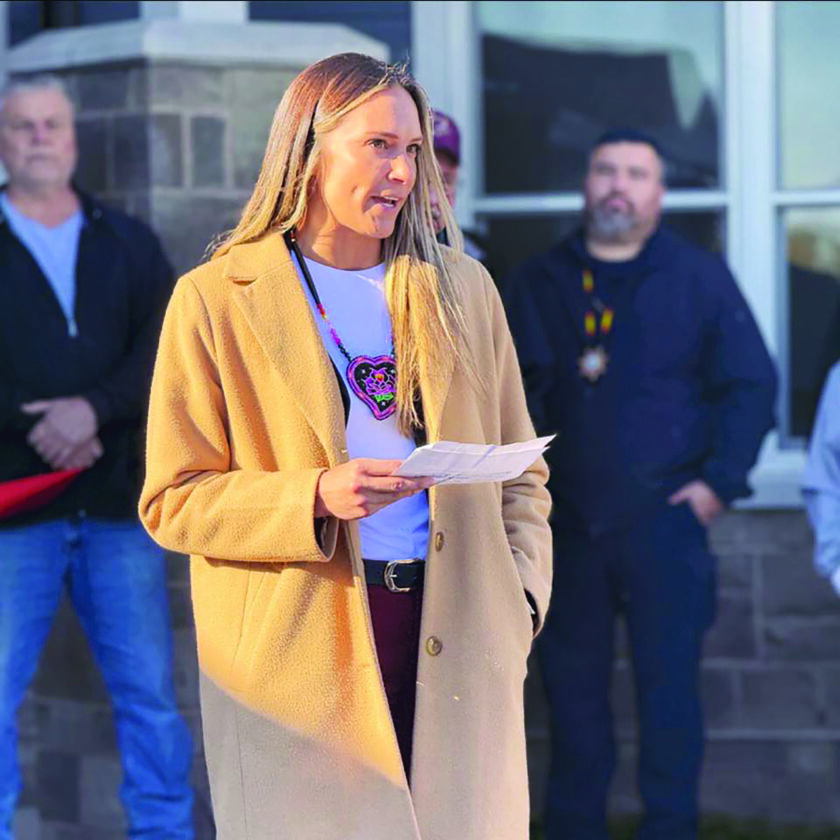
Photo from Facebook Keweenaw Indian Community Chief Executive Officer Brigitte LaPointe at an event in October of last year.
BARAGA — The term “people person” can be applied in a lot of situations. It seems however, that a real “people person” is someone who does more than just “like people” but one who truly “serves people.”
Keweenaw Bay Indian Community Chief Executive Officer Brigitte LaPointe is a person who has devoted her career in service to others. Whether coaching athletics at a collegiate level, working in the healthcare industry or overseeing the KBIC, LaPointe consistently serves the greater good.
The Baraga native initially received notice as a standout high school basketball player. She took her skills to Finlandia University, along with her twin sister Cheryne, where they helped lay the foundation of a successful program. From Hancock, she went on to earn a bachelor’s degree in Sports Science from Northern Michigan University and spent three years as an assistant women’s basketball coach at her alma mater. She earned her master’s in Exercise Science from NMU in 2015 and went on to earn a masters in management, strategy and leadership from Michigan State.
LaPointe’s resume indicates multiple positions in human services including years at UP Health Systems as Corporate Marketing Manager transitioning to Director of Strategic Initiatives. In July 2021, she accepted the position as CEO of Keweenaw Bay Indian Community overseeing Tribal government operations across health, social services, housing, education, public safety, and community services. According to her LinkedIn profile, in her current position, her work “focuses on governance, policy development, strategic planning, and organizational accountability in complex, highly regulated environments.”
Looking back at her history of service, LaPointe said she grew up understanding leadership is really about responsibility to community. She said, especially in tribal communities, service isn’t just a career path, it’s a value that’s passed down. “The work we do directly impacts families, elders and the next generations, it carries a deeper meaning. I have been fortunate to grow up watcheing and listening to many great tribal leaders within my family circle.”
She added, “What has always drawn me to these roles is the opportunity to help build up and provide opportunities that make life better for our people.”
LaPointe credits background as an athlete with shaping her leadership philosophies. “Athletics teaches you a lot about discipline, resilience, and teamwork,”LaPointe said. “In sports you learn that success is rarely about one person but more about the team working together toward a shared goal.” LaPointe feels the athlete’s mindset translates directly into leadership. “You have to trust the people around you, empower them to do their work well, and stay focused on the bigger picture even when challenges come up.”
LaPointe oversees a large operation encompassing the tribe’s human services commitment as well as numerous business enterprises and much more. She acknowledges it’s a job that doesn’t come without hurdles. “One of the biggest challenges in a role like this is balancing the many priorities of a tribal government.” She says those priorities include community services, economic development opportunities, cultural preservation and long-term sustainability. “What I see as success is continuing to strengthen the foundation of the Tribe with building programs that support families, creating economic opportunities and ensuring we plan responsibly for the next generation.” She said progress in tribal leadership often happens through steady, collaborative work rather than one single milestone.
As a woman in leadership, LaPointe offers advice to the next generation of female Tribal leaders. “I would encourage young girls to believe in their abilities and not limit themselves,” LaPointe said, adding leadership doesn’t always look the same for everyone and there are multiple paths order to make a difference.
“Stay curious, work hard and remember where you come from,” she said. “Our communities need people who are willing to step forward, learn and serve. If you stay grounded in your values and surround yourself with good mentors and supportive people, you can accomplish more than you might imagine.”
Reflecting on Women’s History Month, LaPointe said the KBIC tribal community has always been shaped by strong women all around. From leaders, culture bearers, mothers, aunts and grandmothers who carried knowledge and responsibility for the community. “Many of the women who have inspired me may not always appear in history books, but they played critical roles in strengthening the Tribe through their leadership, resilience, an commitment to community. Their example reminds us that leadershp takes many forms and that the work of caring for and guiding a community it powerful in itself.”
LaPointe says leaders keep priorities in focus. “Being an Anishinaabe be woman in leadership reminds me that our role is not just about authority, but about responsibility. The women who came before us carried knowledge, strength and care for the community. I try to lead in a way that honors that legacy and helps create opportunities for the generations that will come after us.”