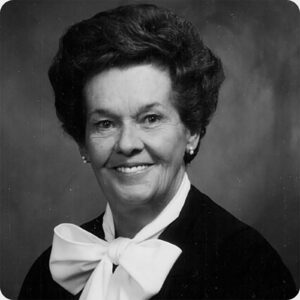
Mary Coon Walters
Baraga woman became New Mexico legend
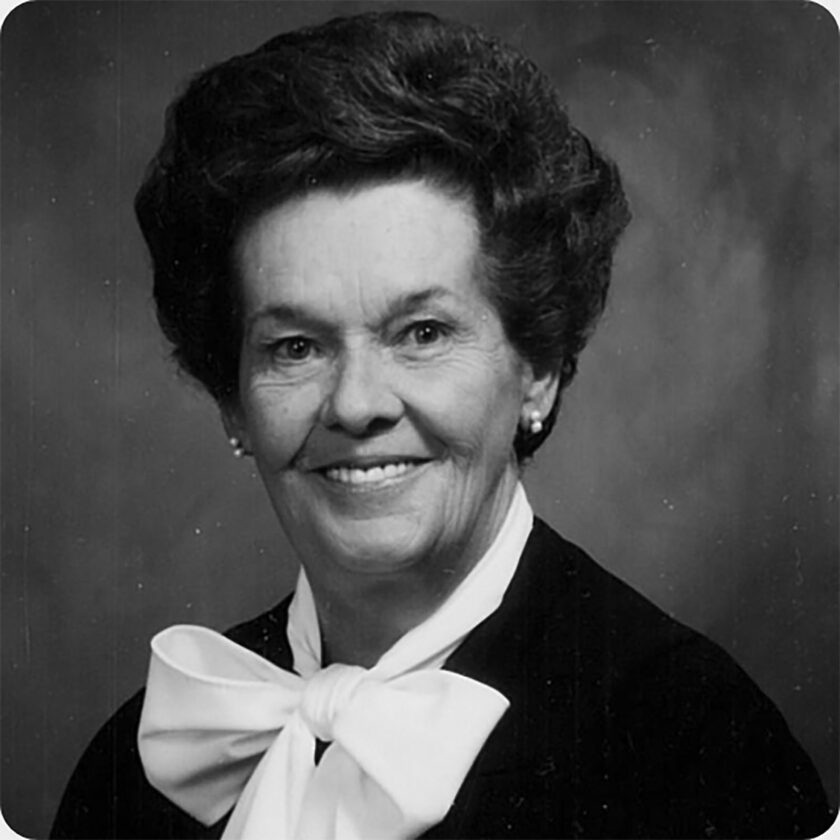
Mary Coon Walters
BARAGA — Students of Southwestern American history, especially, New Mexico history, are no doubt familiar
with the name Mary Coon Walters. History buffs would be quick to tell you Walters served as the first woman on
the New Mexico Supreme Court. There may be others that could tell you she gained fame as a transport
pilot in the Women Air Force Services in World War II.
But you have to wonder if many in the “Land of Enchanbtment” can tell you that this pillar of New
Mexico history, was born in Baraga. That’s right, OUR Baraga, making her an important woman in Upper
Peninsula history as well.
According to the New Mexico Historic Women Marker Program’s website, Walters had moved from her native Baraga
County and was working for a prosecuting attorney in Escanaba when, in 1942 at the age of 20, she took
advantage of a government program offering free training for pilots.
She joined the Women’s Auxiliary Service Pilots (WASPS) shortly before her 21st birdie and served in WWII as a
US Army Air Corp pilot flying transport planes. After the war, she continued her aviation career for a spell
flying for a Texas rancher. Seeking a change of career she looked to return to her pre-war profession and used
the GI Bill to attend college and eventually law school. After graduating from the University of New
Mexico Law School, where she was the only women in her class. She was admitted to the bar in 1962 … at the
age of 40.
In 1972, nine years after her admission to the New Mexico Bar, New Mexico Governor Bruce King appointed
her as a probate judge in Albuquerque, the first female district judge in New Mexico history. She went
on to serve as a judge for the New Mexico Court of Appeals where she became its first female chief
justice. She continued her string of “firsts” in 1984 when Governor Toney Anaya appointed her to the New
Mexico Supreme Court. She was elected to the state high court when the initial appointed term expired.
Described as a true trailblazer in New Mexico’s legal history, she received numerous awards throughout her
career and served as a mentor to many young men and women in the law.
In 1997, Walters received the Henrietta Pettijohn Award from New Mexico Women’s Bar Association for “advancing the causes of women in the legal profession.” She was the first president of the New Mexico Women’s Political Caucus, vice president of the 1969 New Mexico Constitutional Convention, and in 1986 was one of the first five inductees into the New
Mexico Women’s Hall of Fame.
According to the nmhistoricwomen.org, devoted to service her whole life, she once told a reporter that
“a country worth living in is a country to which you have an obligation to offer your services when those
services are needed. That’s an obligation of every citizen, not just the men.”
According to her Wikipedia page, Walters died in April of 2001 at the age of 79. A historical marker
recognizing her contributions to the state was erected in Albuquerque. In 2007, The New Mexico Supreme Court
posthumously named her an Honorary Chief Justice of the Supreme Court and ordered her portrait be displayed in
the New Mexico Supreme Court Building inside the Hall of Chief Justices.
She will go down as one of the most significant women in the history of New Mexico, a legacy that began far
from the deserts of New Mexico on the shores of Lake Superior’s Keweenaw Bay.