Depot of significance
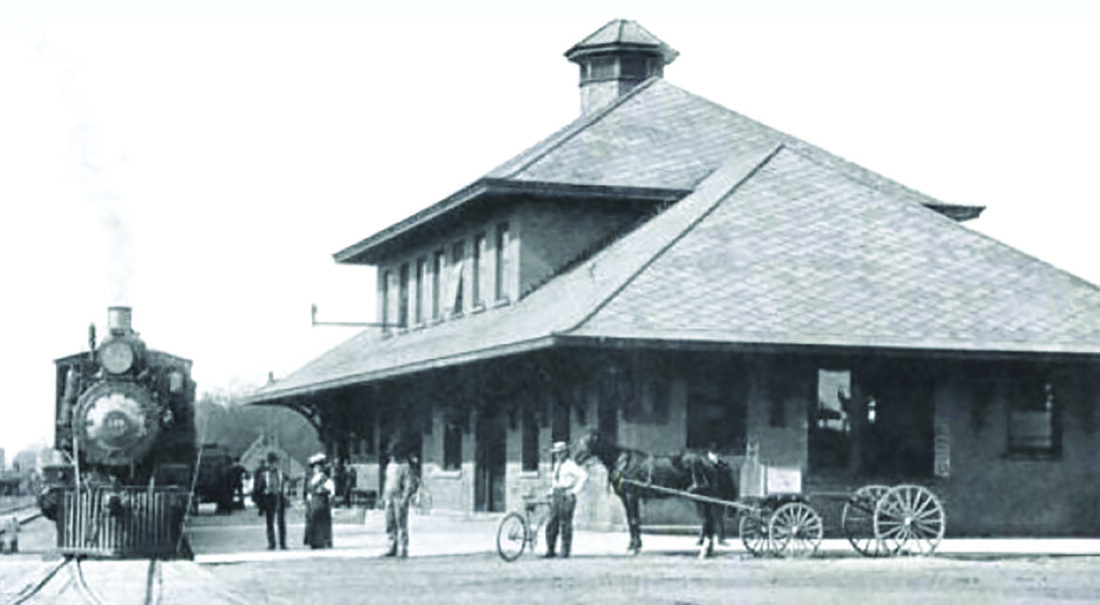
Photo courtesy of Jim Flood Photo1: michiganrailroads.com The D.S.S. & A. Depot, approximately 1910.
CALUMET – The The former depot is significant to the history of the Calumet area and to the state.
Neglected and largely abandoned since the last passenger train, the Copper Country Limited, departed the depot on March 7, 1968. During the height of operations of the Calumet and Hecla Mining Company, the depot was the final travel destination of thousands of immigrant workers and their families coming to the north end of the Copper Country.
During the early days of the infamous labor strike of 1913, Michigan militia troops, equipment and horses arrived at this depot, as did armed deputies and U.S. House committee members who came to investigate the strike.
When Calumet resident Jim Flood purchased the building in 2024, it was in poor condition. Flood and his wife, however, bought it from Calumet Township with the goal of restoring it to its 1908 appearance. “We’ve been driving by it for 40, 50 years,” Flood said. “It’s always looked like this.”
Flood fully understands the significance of the depot and its role in the Copper Country’s history.
The site the depot stands on was originally owned by the Mineral Range Railroad, which ran its first train between Hancock and Calumet on October 6, 1873. The next day, its first passenger train arrived at the new, wooden depot. The company rand two daily round-trips between Hancock and Calumet. Two more dailies were added the following spring. By 1910, the depot saw five passenger trains come and go per day.
In 1892, the Mineral Range line was acquired by the Duluth, South Shore & Atlantic (DSS&A), which connected the railroad to a national network. Passengers could now travel between Chicago and Calumet and vice versa. The D.S.S.&A. constructed the current depot in 1908.
According to the Calumet News, the Calumet depot, when complete, would be larger than both the Houghton and the Marquette depots. The main floor was to have mosaic tile, modern toilet rooms, electric lights and steam heat.
On the main floor were ticket offices, waiting rooms, a baggage and freight area, and men’s and women’s bathrooms. On the second floor were the offices of the dispatcher, clerks and the railroad superintendent.
In 1908, the Calumet News announced the new depot, when completed, would be a distinct ornament in Calumet, “standing as it does, as the gateway to one of the busiest little cities in the state.”
In 1999, John and Jane Griffith purchased the building with the intention of converting it to a restaurant and a gift shop on the first floor, and bed and breakfast lodging on the second floor. The township and the Griffiths subsequently began discussions on the township purchasing the building in 2009.The township purchased the structure in January 2017 for $40,000.
At the time of the purchase, township Supervisor Paul Lehto said the primary reason for the purchase was to preserve the building from further deterioration. In 2018, the township approved a request for a $6,000 grant from the Keweenaw National Historical Park.Flood purchased the building from the township in 2024 with the sole intention of preserving it and make it available to the community for private and public events. “This is 100% about preserving what we consider to be one of the finest historic structures in the Copper Country,” he said.
Flood said his intent is for visitors to the depot to step back into the first decade of the 20th century, to see the exterior as it looked, and to experience the interior as the tens of thousands of immigrants coming to Calumet did, even to the functioning of the baggage processing and handling, and the passengers arriving and departing.
“This is being done for our community,” Flood said, “and for the sake preserving history.”