
Proceed with caution
MSP winter driving tips
Trending
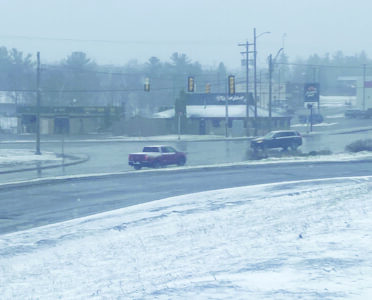
CALUMET -- With the first snow accumulations expected this weekend in Copper Country, the Michigan State Police (MSP) Calumet Post wants drivers to practice safe driving practices and has tips on how to avoid hazardous incidents on the road and how to react if one finds themselves in a winter accident. Most locals are not strangers to wintery conditions, but there are some practices and reminders that can help everyone stay safe behind the wheel.
MSP Community Service Trooper Alan Narhi said driving safely in the winter begins before a vehicle pulls onto the street. He said drivers should warm up their vehicles before driving and remove all ice and snow from not only the windshield and side mirrors, but also the top of the vehicle. Built up ice and snow on the top, bumper or trunk of a vehicle can get caught in the wind and fall onto other vehicles or it can slide down and cover the windshield, obstructing the driver's view of the road.
"And now that person is is in danger of losing control of their vehicles, and they have a big pile of snow flying out," Narhi said. "Cleaning the windshield and cleaning off your car fully is something that we want to remind people to do, because we see that accident often."
Another preparation drivers should make before pulling out of the driveway is to have an emergency kit in their vehicle. Blankets, coats, winter hats, gloves, bottles of water and snacks such as granola bars should be handy in the event an accident occurs and the driver and passengers are waiting for emergency services. Cat litter could also be packed to use as traction on icy surfaces if a vehicle is not moving easily but not entirely stuck. Narhi also recommends utilizing an MDOT online tool called Mi Drive. Mi Drive will reveal road conditions and inform drivers of what state roads (M) and US roads have been plowed.
The last thing drivers need to keep in mind before they leave is to remember to plan ahead. Icy road conditions can inhibit efficient driving and slower speeds will be necessary for safe driving. Therefore drivers should leave early to accommodate lost time, and drive slower than the speed limit to maximize the amount of control a driver has over a vehicle. Most accidents which occur in the wintertime happen because of drivers going at a speed in which they effected their control over the vehicle.
Once on the road, Narhi recommends applying that extra time to all driving practices. "Just give yourself an extra 5 to 10 minutes so you’re not rushed, because all too often we forget how slippery the roads are as first snow comes. It’s usually very slushy too. Allow yourself to slow down, drive a little bit slower, brake a little bit earlier. If you’re turning, put your turn signal on a little bit earlier because you’re alerting the other drivers. Use your turn signals earlier than you would and give yourself that reactionary gap. In the summertime, when you have good dry roads, your reactionary gap is normal. Well, in the wintertime you lose traction, and you just need more of a reactionary gap," Narhi said.
A lot of minor fender benders in the winter occur due to drivers not slowing down their vehicles in time. Narhi also recommended to not slam on brakes, as it locks the tires and does not allow for traction. Tires need to be rolling in order to achieve friction, and if the tires lock up there is also no steering or accelerating control. Sliding and losing control of steering especially happens when driving in slush.
"Everybody’s felt that before, where you get the slush inside the road, and your car gets pulled into that slush," Narhi said. "Well what you need to do is when you let off the gas, that weight of the vehicle shifts forward. Your speed slowly starts come down to the weight of the vehicle which pushes back through that slush to get back onto the good traction and then apply a slow smooth steering input. Turn into turn into the skid, turn into where you want the car to go."
He added people need to be aware when the vehicle is correcting itself the driver needs to straighten the steering wheel out and the slow smooth inputs on slippery conditions will help greatly. Sharp steering will brake traction and the vehicle will just move straight.
Wintertime laws must also be taken into account when driving on the road. Snowplows can not be passed on the right side, and private drivers who utilize plows can use orange lights on the tops of their vehicles when plowing. However citizen plows cannot use red, blue or green lights. Narhi recommends keeping a six to ten car distance when driving behind snowplows, and if a driver needs to pass one to go on the left side and to remember it will take more time than passing a regular vehicle. Snowplows are authorized vehicles under Michigan's Move Over Law, and stopped snowplows and tow trucks on the side of the road with flashing lights need extra space and reduced speed of 10 mph when driving past them.
However careful drivers carry themselves, sometimes accidents still happen. If a vehicle finds itself in an accident or has drifted off the road, the hazard lights need to be turned on and the driver needs to dial 911 and inform the operator of accident and report any injuries. When waiting for emergency services to arrive, drivers can utilize the emergency kit, but need to keep in mind if snow has plugged the exhaust, the emissions will leak into the cab of the vehicle.
"So if you’re going to leave the car running to stay warm, do it for 5 to 10 minutes at a time, shut it off, open the windows for a little bit, let it air out," Narhi said. "Or if you are leaving it running, you can just leave the windows open as well just to help fresh air ventilate through."
Narhi said drivers need to be aware depending on where they slide off the road, help can sometimes take a long time to arrive, anywhere from 10 minutes to two hours.