Remembering Bill Ivey
Former NEA under Clinton never forgot his roots
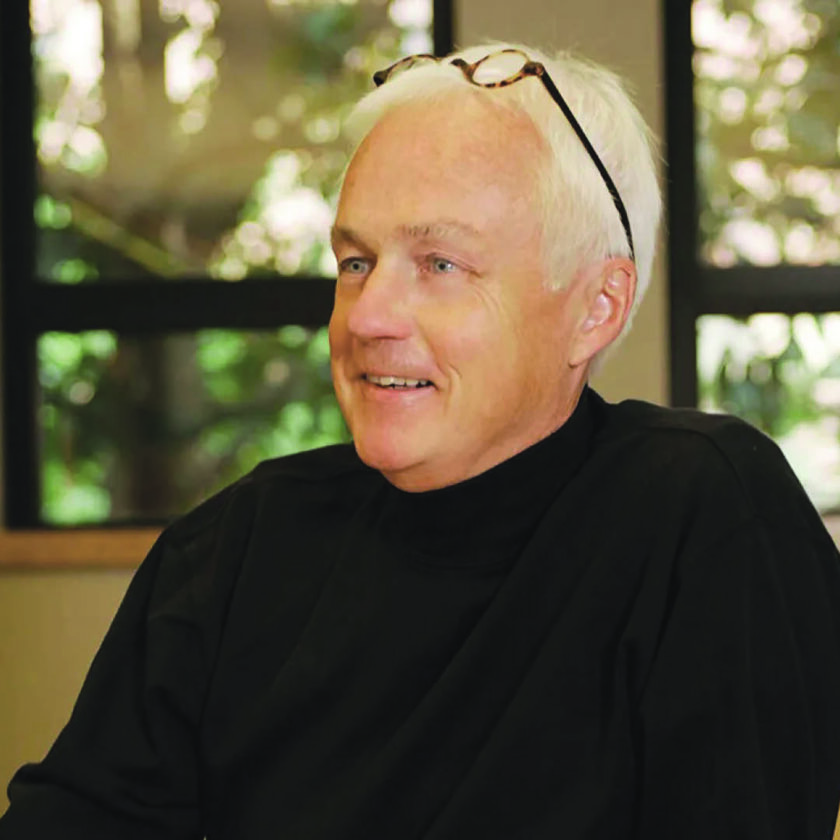
Bill Ivey
CALUMET – Recently the Fine Arts world mourned the death of Bill Ivey, an influential folklorist, cultural policy leader, and advocate for the arts who served as chairman of the National Endowment for the Arts. Ivey passed away on Nov. 7, he was 81.
According to his obituary, Ivey was Director of the Country Music Foundation (CMF), 1971-1998. As CMF director, Ivey was responsible for the Country Music Hall of Fame and Museum and its related library, publications, and educational programs. He served as Chairman for the National Endowment for the Arts from 1997-2001 and later served as director of the Curb Center for Arts and Public Policy at Vanderbilt University.
Several obituaries were written for Bill Ivey, including one that appeared in the New York Times. All of them mention, almost as afterthought, that he was raised in Calumet.
In fact, Ivey’s Copper Country roots run deep, and he is dearly remembered by those who knew him. Among them is Jim Enrietti, who was related to Ivey through marriage. “William’s daughter Elizabeth, Bill’s sister,” said Enrietti, “was married to my brother, John.” Enrietti remembered Bill Ivey’s grandparents, William Thomas and Martha (Pooley), living in Mohawk near the Mohawk Superette.
Among Ivey’s closest friends was Oren Tikkanen, which should come as no surprise as Tikkanen is also a folklorist. He earned degrees at the University of Minnesota (BA), and at the University of Michigan (MSW). While pursuing a career in clinical social work, Oren played old-time dance music on guitar, mandolin, 6-string banjo, and bass guitar with various bands, and also established Thimbleberry Recordings with his late wife, Toni Segal Tikkanen.
Tikkanen said he got to know Bill when they were Juniors in High School. “Bill and I were real good friends in high school and later on. He and I played music together and hung out together. I knew his family pretty well. His sister was one of my sister’s best friends.”
Ivey’s father, William, had taught at the Copper Harbor School, later becoming the juvenile officer at Houghton County Probate Court. His mother, Grace (Hammes), was an English teacher in the Calumet-Laurium-Keweenaw School District. Both of Ivey’s parents were natives of Calumet, Tikkanen said, adding his Grandfather Ivey was a Cornish immigrant, who had come to the region as a miner and rose to the rank of mining captain.
“They had a house on the corner of Depot Street and Hecla,” Tikkanen said, “right across from the Faith Lutheran Church, in one of the mining captain’s houses.” When Ivey’s grandfather was promoted to captain, said Tikkanen, the (Calumet and Hecla) company wanted to give them a house appropriate to his status. “That was the house they lived in when they moved back (from Detroit) in 1961. Bill transferred to Calumet High School, and for the last two years, we really clicked, we played music, we played guitar together.”
Tikkanen said he and Ivey formed a musical group with a couple of older men and performed in talent shows. “While everybody else was drinking beer and listening to rock and roll, we were listening to the Kingston Trio and the Chad Mitchell Trio and strumming guitars, and listening to old jazz.”
Tikkanen said Ivey’s music came naturally to him, adding, “it was a family thing.” Tikkanen said Ivey’s father was a noted and gifted vocalist, who sang with dance bands in the area when he was younger, and was in demand for singing at weddings and funerals.
Tikkanen recalled sitting with Bill in the Ivey family living room, playing guitar. ”His dad, Bill, Sr. would get out his old 78s,” he said. “He played Benny Goodman, and he’d play Django Reinhardt; he’d say ‘you guys wanna hear some real music? Listen to this!'”
Tikkanen said after he and Bill graduated, Bill went to the University of Michigan. “I don’t know if any of Bill’s obituaries mentioned it,” said Tikkanen, “but he loved flying. In his later years, he had a private pilot’s license. He owned three or four airplanes, and he would fly one of his small planes from Nashville to the Houghton County Memorial Airport for the summer.”
When they graduated from high school, Ivey hoped to become a Navy pilot. He entered the Navy ROTC program at U of M, where they required an engineering curriculum, and the math required were beyond Bill’s ability, Tikkanen said.
As a side note, Tikkanen said one of Ivey’s math instructors was Ted Kaczynski, who later became known as the Unabomber.
“Bill had more stories in him – he met more famous, and sometimes infamous, people,” said Tikkanen. “He would just leave my jaw dropping.”
After graduating with a history degree, Ivey taught guitar at the Herb Davis Guitar Studio, in Ann Arbor.
Tikkanen said while in Ann Arbor, Ivey developed a deeper interest in folk music, and went to Indiana University, where he studied folklore at the graduate level. Among his instructors was Richard Dorson, author of the book Bloodstoppers and Bearwalkers: Folk Traditions of Michigan’s Upper Peninsula.
“He was one of the first folklorists to seriously look at the folklore of Upper Michigan,” Tikkanen said, “and Bill studied under him, but in Bill’s case, he became more interested in the music styles, but especially Bluegrass and Country music and whatnot.”
Ivey then set out to obtain a PhD, but did not complete the coursework. He was offered a job at the Country Music Hall of Fame, said Tikkanen. He accepted it, and was quickly promoted to Director of the Country Music Foundation.
Jim Enrietti recalled the family talking about Bill’s accepting the Hall of Fame position in Nashville. “Billy took the job in Nashville,” he said, “and there was a director of the fledgling Hall of Fame. The guy, a Nashville fixture, was elderly, and he passed away. Billy was his assistant.”
The organization’s Board conducted an extensive search to find a director for the Hall of Fame, when one the trustees suggested Ivey, as he had been the functioning director. “And that’s how he became the director,” Enrietti said.
Ivey held the position from 1971 to 1998. During his tenure there, Tikkanen said, he made a remarkable reputation for himself as folklorist, and he became president of American Folklorist Society. “He got involved at pretty high levels in the cultural scene down in Nashville, which led to political connections,” Tikkanen said. “He got to know Al and Tipper Gore fairly well. Then, during the Clinton Administration, Bill was recommended for the National Endowment for the Arts and became Director of the NEA for the rest of the Clinton Administration, and established quite a name for himself as peacemaker and negotiator.”
Tikkanen said Bill Ivey truly was a folklorist. “Not just music,” he said, “but he was really interested in the way communities work, what the way the political structure worked around here.”
Tikkanen said Ivey would have coffee with his (Tikkanen’s) brother, Tom, who is the chairman of the Houghton County Board of Commissioners, to learn what was going on in the communities within the county. “He was interested in our local culture,” said Tikkanen. “He got to know members of the Calumet Players.
When the Calumet Players performed a play by Henry Gibson last year, he said, Bill made a special trip from Nashville to see what the Players would do with it.
“It struck me as interesting that Bill would make sure he got to see this small town amateur theater production of play,” Tikkanen said. ‘He was very interested in what was going on in the Keweenaw, his old stomping grounds.”
Tikkanen said he and Bill remained close until Bill’s passing on Nov. 7.
“We would meet and have lunch four or five times a year,” he said. “He loved Carmelita’s, in Calumet, and he loved Shute’s bar.”
“He was a very, very interesting guy,” said Tikkanen, “and it came as a terrible shock to me when I found out he died. We had lunch at Carmelita’s on Oct. 30.”
Tikkanen summed up Bill Ivey’s status in the world of Performing Arts and folklore.
“Like I tell my friends,” he said, “Bill is the probably the only person I will ever know who ranks an obituary in the New York Times.”