Mission accomplished
Team completes moose collar/capture effort
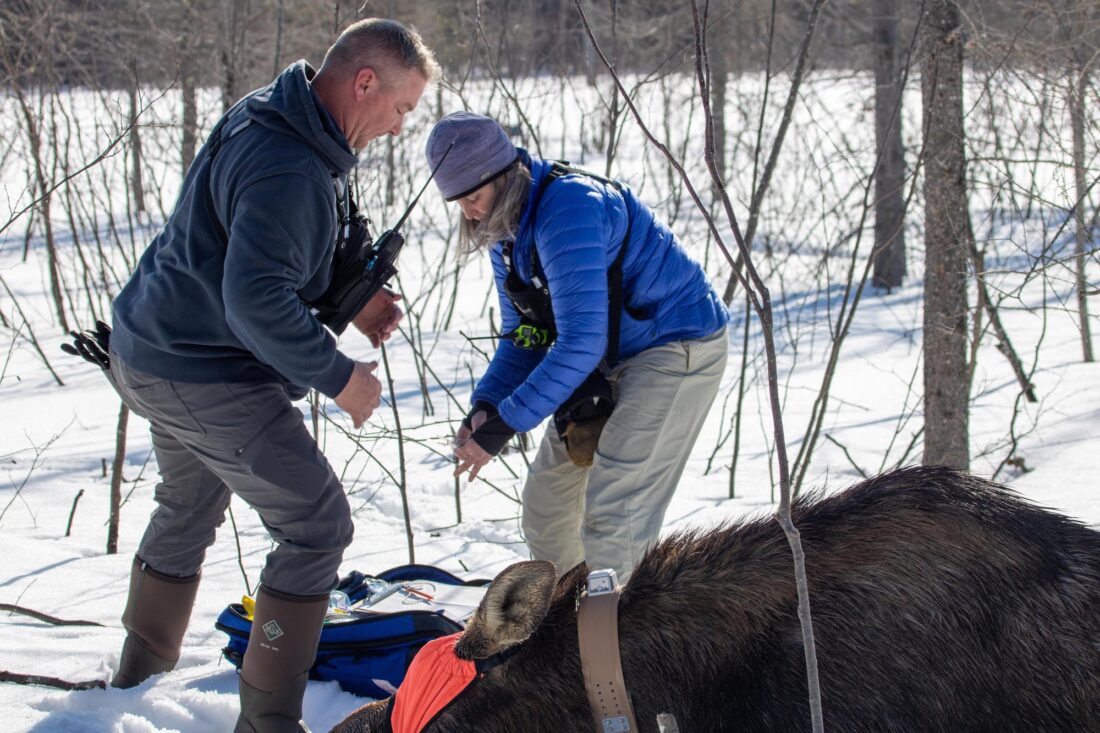
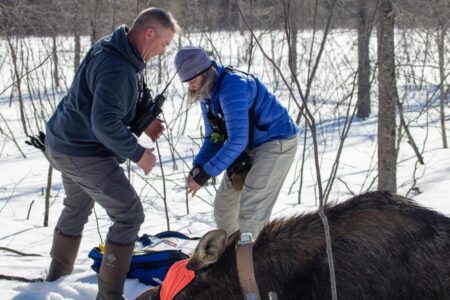
DNR Photo DNR Wildlife Division biologists Clay Buchanan, left, and Kristie Sitar conduct a biological workup on a newly collared moose in Iron County.
MARQUETTE — A cooperative moose research team, including the Keweenaw Bay Indian Community, Northern Michigan University and the Michigan Department of Natural Resources, has concluded its efforts to capture and collar moose in the core moose population area in the western Upper Peninsula for this winter.
The project began last winter, with the collaring of 20 moose, to help learn more about the region’s moose herd and why population levels have stagnated.
This month, the team worked from Saturday through Tuesday with a goal of capturing 40 moose.
A total of 41 new moose were captured, and two more moose were re-collared over the four days. The 41 moose included 20 adult females, 10 adult males and 11 calves. The team now has a total of 56 collars deployed, including the moose collared in last year’s capture efforts.
Moose team members said this was a successful capture event and staff worked together incredibly well to reach its goal. These moose, and the biological samples and collar data they provide, will be invaluable in helping the researchers better understand moose survival and factors that are influencing population growth in the western Upper Peninsula moose population.
The DNR is planning to issue a Showcasing the DNR story soon to provide a closer look at this year’s cooperative moose research effort.