
Workin’ on the railroad
Q&TLRR restoration continues
Trending
FRANKLIN TOWNSHIP - The project to restore the Quincy & Torch Lake Railroad engine yard, along with two steam locomotives and several mining cars, continued this past week, with further work being done to the tender of the No. 1 Locomotive. It is a project that began two years ago, said Chuck Pomazal, a retired civil engineer from the Illinois Dept. of Transportation.
He is also an avid model railroader. He and six to eight volunteers, all friends who share the common interest of trains and railroad history, have dedicated the past quarter century to preserving the history of the Quincy Mining Company's short-line railroad. It did not transport people, it was not a public railroad. Built and owned by the mining company, it served just two purposes: to haul copper rock to the company's stamp mill, on Torch Lake, and to haul coal back to the mine site from the mill's wharf. Preserving it is a deep passion for these volunteers.
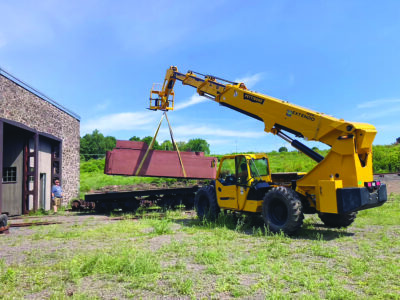
"We had to rebuild the entire frame of the tender," Pomazal said. "The tank sat outside for decades. This week, we sandblasted it and primed it, patched some of the holes, replaced the rusty panels, and things like that."
After the frame was complete, the tender was lowered onto it using a crane. It was then pushed into the engine house, for continued work. When the group returns later this summer, they will paint the unit black.
This fall's agenda is to have Locomotive No. 1 brought from its current location near the hoist house to the engine yard. Then the restoration on that engine can begin, said Pomazal.
This will require lifting the engine from the track with a crane, then place it on a flatbed semi to be transported to the engine yard. After restoration is completed, it will be placed on track, which is currently being laid, near the water tower.
Last year, the volunteer group received a donation of 100 railroad ties from Coppers' L'Anse Tie Recovery Yard. The purpose of the ties, says Chuck Pomazal, is to lay railroad track from the Q&TL RR engine house, approximately 200 feet to the water tank, which is located on the property of the Quincy Mine Hoist Association. The group also restored the water tank.
The railroad is an important aspect of the Quincy Mining Company, and now the Quincy Hoist Association, in the preservation of the industrial and cultural landscape of the Copper Country.
Like the Quincy hoist, and the No. 2 shaft house, the Q.& T.L.R.R. is one element of a much larger picture, which includes the Quincy Smelter, in Ripley.
The smelter is the only remaining industrial site of its type in the world and illustrates 19th and early 20th century machinery, refining and casting processes that made Michigan copper production important not only to the nation, but to segments of Europe, as well.
Preserving mining and railway infrastructure prevents irreplaceable local history from being lost to demolition and scrap.
Much of the original engine yard layout still exists, and dedicated volunteers continue to restore original locomotives (like Locomotive No. 1 and No. 5). The iconic maintenance garage, the Quincy Engine House, has been stabilized and restored with modern roofing and masonry. It allows visitors and locals to physically step into the past and understand the challenging engineering feats and labor that built the region.
Built in 1889 a three-foot narrow gauge, the six-mile long Q&TLRR was crucial to the Quincy Mining Company. It moved copper rock from the mine's shafts above Hancock to the stamp mills at Mason, then hauled coal from the dock in Mason back up the hill to the mine.
The railroad permanently ceased operations in 1945, when the Quincy Mining Company shut down its copper mining operations, and the railroad.