
Breaking in down
Saaranen explains modern jail requirements
Trending
FRANKLIN TOWNSHIP - During Wednesday's Industry Day meeting, Houghton County Sheriff Josh Saaranen spoke on modern jail standards and security classifications in the current Houghton County Jail and what is mandated by the Michigan Department of Corrections (MDOC).
Saaranen said county jails are required to provide several security classifications ranging from low-level to high-level security contingent on the severity of the criminal activity.
When the discussion of bed space is raised, said Saaranen, the current jail does not have available spaces to classify inmates based on age, sex, crime and criminal history. That is why, he said, more beds are necessary.
"When we've been inspected by the Department of Corrections, we've gotten shots across the bow saying 'you don't have enough space for these classifications,'" he said. "We talk about classification a lot.” "So, when it comes to bed space, we're talking about 60 to 80 beds."
The number of beds available in the current jail is 28.
The need to increase the number of available beds is not necessarily to accommodate a maximum number of inmates. It is primarily to provide additional space for security classifications according to MDOC requirements.
"Right now, we have three maximum security cells," Saaranen said. "Obviously, we're going to want to have a little bit more capacity."
There are no high-security detainment areas in the female cell block, he said. His request for the number of maximum security cells will be approximately five for both the male and the female blocks.
Among the MDOC-required spaces lacking in the current jail are a secure, separated booking area, a medical room, holding spaces, mental health spaces, juvenile holding spaces in addition to the individual beds in the general population area, Saaranen said. Those are in addition to the number of beds allocated for the general population area.
MDOC also mandates the various required square footage for the various spaces, Saaranen said.
In Michigan, square footage requirements are strictly based on security classifications and confinement hours to ensure safety. Low security classification requires 52 square feet of sleeping area per inmate in dormitory cells, supplemented by an adjoining day room. Medium and maximum security require up to 65 square feet of floor space per single occupancy cell, in addition to upgraded security doors and secure remote-locking capabilities.
"So, there's going to be a range of square footages that DOC requires us to maintain for those areas," Saaranen said. "Currently in our jail, we essentially have higher-risk cells that are separated, individual cells, so that's where all of this engineering and architectural stuff - we haven't really flushed that out, what that's going to look like."
Saaranen said the issues with the current jail are not limited to a lack of beds. The jail jail was built in 1963, to the standards of that time. Because it was designed in a linear style it is not secure nor safe as modern jails are, as modern jail design utilize pods. None of the spaces are ADA compliant.
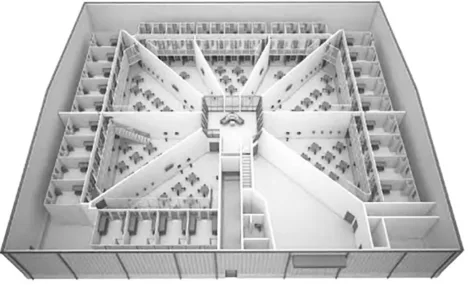
A linear jail utilizes a rectangular design with long, straight corridors and cells separated by bars. Officers must patrol hallways intermittently. The pod-style design clusters cells around a central, open communal area, allowing officers to maintain constant, unobstructed visibility of all inmates.
There are additional space issues, Saaranen said. In addition to housing the jail, the facility also houses the sheriff's office, which includes spaces related to field investigations, evidence and record storage, firearms storage, and training space.