
Kayaking safely
PFDs: Ratings and labels explained
Trending
Part Four (continued): Essential safety
equipment
This is one in a series of
staff writer Graham Jaehnig's
personal experiences as a beginner kayaker.
By GRAHAM JAEHNIG
gjaehnig@mininggazette.com
The last installment of this kayaking series opened the discussion on life jackets, personal flotation devices (PFDs) and their differences. According to the U.S. Coast Guard's Boating Safety Division, the best life jacket is the one you will wear. For the purpose of today's installment on kayaking safety, when discussing flotation devices in general, we will use the old, seldom-heard generic term, life preserver.
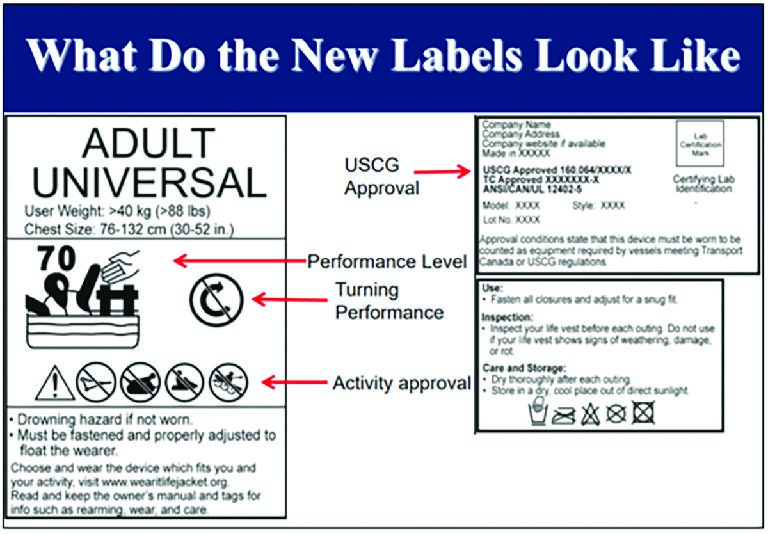
If the life preserver you are looking at purchasing does not have a clearly marked label stating the preserver is USCG approved, don't buy it. The label on the device will provide the information you need to know about it.
As pointed out by the USCG boating safety website -- and this is important to know -- some life preservers are designed to keep your head above water and help you remain in a position that permits proper breathing. Some don't. The label will provide you that information. But reading a label can be as confusing as choosing your first kayak. We will try to explain it here.
According to the USCG site (the URL is included at the bottom of the article) there are four basic design types of PFDs: inherent, inflatable, hybrid and special purpose.
There are two main classes of PFDs:
• Those which provide face up in-water support to the user regardless of physical conditions (life jackets).
• Those which require the user to make swimming and other postural movements to position the user with the face out of the water (buoyancy aid).
The site continues to state that wearable PFDs are categorized by performance Type and/or performance Level:
Type I, II, III, V
Level 50, 70, 100, 150.
The number in performance Level Devices (Level 70) indicates the minimum buoyancy of the device. Note here the difference: the rating is based on type and level of performance. This is where knowing how to read the label becomes necessary. The USCG changed the reference type because, they claimed, the majority of people didn't understand it. However, many websites still use it, probably because in reality, it is easy to understand, it is straightfoward, and still useful.
Performance Type Devices are:
• Type I – has the greatest required inherent buoyancy and turns most unconscious persons in the water from a face down position to a vertical and slightly backward position, therefore, greatly increasing one's chance of survival.
• Type II – intended to turn some unconscious persons from a face down position in the water to a position where the wearer's respiration is not impeded.
• Type III – intended to support a conscious person in the water in an upright position. This type of device is not required to turn an unconscious person in the water from a face-down position to a position where the wearer's respiration is not impeded.
• Type V – is approved for restricted uses or activities such as boardsailing, or commercial white water rafting. These devices may not be suitable for other boating activities. The label indicates whether a particular design of Type V can be used in specific application, what restrictions or limitations apply, and its performance type.
Again, the above is an outline of each type of PFD. For example, a Type I PFD is intended to save unconscious people by turning them over on their backs in the water, and keeping their faces out of the water. A Type III PDF, on the other hand, is intended for conscious people and is not designed to roll the person over from a face-down position. This type rating is not the same as the Performance Level rating.
The Performance Level Rating uses a number system to explain what the PFD is designed to do. For example, the number you see on the label will help you decide if that is the PFD that best describes what conditions it is designed for. A lower number indicates that the PFD is intended for near-shore activities, in calm water, and is appropriate for recreational kayaking and canoeing. The performance rating number system ranges from 50 to 150. Higher numbers indicate that the PFD is intended for waters further from shore and when a person expects to be in the water waiting rescue for a longer period of time:
Performance Level Devices:
• Level 50 – intended for use by those who are competent swimmers and who are near to bank or shore, or who have help and a means of rescue close at hand.
• Level 70 – intended for use by those who have help or a means of rescue close at hand, or who are near bank or shore. These devices have minimal bulk, but cannot be expected to keep the user safe for a long period of time in disturbed water.
• Level 100 – intended for those who may have to wait for rescues, but are likely to do so in sheltered water. The device should not be used in rough water.
• Level 150 – intended for general application or for use with foul weather clothing. It will turn an unconscious person into a safe position and requires no subsequent action by the user to maintain this position.
The label on the PFD also uses graphics to further illustrate what it is and is not intended for. For instance, a curved arrow inside a circle with a line through it indicates that the PFD will not turn a person over or guarantee that it will keep a person's face out of water.
A rule of thumb when kayaking, canoeing and choosing a PFD is: Plan for immersion and never paddle further from shore than you want to swim back.
For more information on life jacket types and performances, visit USGC boating at https://uscgboating.org/recreational-boaters/life-jacket-wear-wearing-your-life-jacket.php
See also: https://www.dco.uscg.mil/CG-ENG-4/PFD/