
Reconnecting to the community
KNHP wants to reclaim some of Agazzis Park
Trending
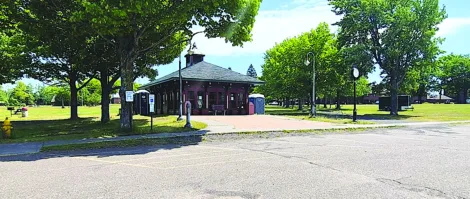
CALUMET TOWNSHIP - The Keweenaw National Historical Park (KNHP) is looking for ways to reclaim a bit of Agazzis Park that has been lost due to development.
Karl Dieztler, historic landscape architect for the KNHP, said he is searching for "low hanging fruit" for long-term opportunities to expand the area of Agassiz Park.
Dietzler said, for lack of better terminology, has been cut off at two ends, and it starts nowhere and ends nowhere.
"That's not the best way to describe it, but trying to reconnect people so it seems a little more welcoming," he said. "We're looking for opportunities to try to reconnect Agassiz Park with the community."
Dietzler said the park was identified in the KNHP Calumet Unit Cultural Landscape Report (CLR), which identifies Agassiz Park as a key component of company-planned paternalism, highlighting its evolution from a “Calumet Commons” into a structured landscape designed by Warren Manning in 1917.
The report documents the park's role as a green buffer, its subsequent fragmentation through land sales for civic use. When Agassiz Park was dedicated on Sept. 26, 1923, its focal point was the bronze statue that is now near the KNHP headquarters. The statue was relocated in 1974.
In the CLR, short-term suggestions included conducting a tree survey, determining the condition of the surviving trees, looking at the original walkways, and improve them, to make the park look like a cared-for space. Then there's the long-term, if you will."
"We want to try to retain the historic features that are there, and not eliminate those, or to shrink those to make it a smaller version of it was once was," Dietzler said. "Try to retain that, but yet try to reconnect the park with the community, and if there is land that was once part of that park could come back."
Sean Gohman, executive director of the KNHP Advisory Commission, said the ultimate goal is getting the community to use the park.
"What do you have to do to make it usable?" he asked.
Dietzler agreed, saying: "It's all about the use; getting people back there."
Dietzler said from a design perspective, Agassiz Park does not feel connected to the community, very simply because it's been cut off.
"There is private development on all sides, and so it starts nowhere and it ends nowhere."
Originally established by Calumet and Hecla Mining Company President AlexanderAgassiz in the early 1870s the space served as a buffer between the mining company's surface plant operations and the rapidly growing village. It was used as pasturage for cows belonging to company employees.
While the large space could have been designated as a town square, in Boston, where Agassiz resided, did not have a town square; instead, it had Boston Common. Wanting to instill a sense of pride in the community, he called the space Calumet Common. Later, it was also used as a baseball field and for other recreational activities.
According to the CLR, when Agassiz Park was built, the paths in the park connected directly to Scott, Portland, Oak and Elm Streets as well as paths along the western, eastern and northern sides of the park. Flanking both sides of the paths along the western, northern, and north portion of the eastern paths. Manning provided hedges of shrubs. These served to enclose the park by providing a strong definition of its edges.
Over the years, the park was gradually reduced in size to make room for parking along Fourth Street, a football track and field on one end, and a housing project on the other end.