
Trending
One of my favorite stores is St. Vincent de Paul’s. Almost every small town in the UP has one. I am sure you have either shopped or visited one in your travels. What I find interesting is that many people don’t know how the concept of thrift stores started. Or why it’s named after a Catholic Saint -- St. Vincent de Paul.
I am going to highlight Christians who have made a difference. In some future columns, Profiles in Faith will highlight brave, important Christians who made a difference in the times they lived in. Their lives speak to our current times and how we, as Christians, can make a difference in our lives, our families, and our communities, and be a beacon of hope in our fragile world. Several weeks ago, I presented John and Charles Westley and how they changed their society. God raises up souls to witness to love, compassion, and forgiveness in every era.
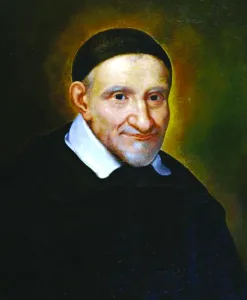
Vincent de Paul: Who was he, and what did he do that merits our interest? Born in 1581, a time not unlike our own. Elizabeth was queen of England. Religious wars and moral unrest followed the Protestant Reformation; new worlds were opening; Quebec was founded in 1608. The Spanish Armada sailed to England in 1588 and was defeated by weather. All kinds of disruptions, fights over faith, and land grabs were happening around the globe. Turmoil and a lack of clear objectives, amidst high taxes, extravagant corruption, and private political practice, were everywhere.
It is into this world that Vincent de Paul (1581-1660) was born. He decided to become a priest, and at 19 was ordained. God watched over Vincent, and in doing so, gave him a two-year introduction to suffering and poverty. Vincent, on his way home from a trip to Italy, was kidnapped by the Barbary Pirates and sold into slavery. He was made a slave to several people, doing the most menial things, but God wanted Vincent to see the needs of the poor and the suffering they endured. This experience changed him; it turned his heart to see His brothers’ and sisters’ plight. He decided to serve the poor for the rest of his life. He escaped from slavery, returned to France, and became a pastor at a small church. But as time went on, Vincent became well educated and served as confessor to several nobles. He became the chaplain to the French Galleys. In 1622, Ships both merchant and military, were powered not only by sail but by human power. Justice was rather simple: you were not condemned to death; you were sent to the galley ships, chained to a bench. Each ship may have had as many as 200 souls rowing, five men to a 33-foot oar, which you were shackled to. The conditions were deplorable. Vincent visited the Ships, founded a hospital to care for the sick slaves, and bought 1200 of them out of their sentences. He also recognized the need for pastor education and a return to a spiritual life. He founded both men’s and women’s organizations to help. He convinced noblewomen to care for and financially support the poor. One of his major contributions was founding a new women's order, the Sisters of Charity. They were not cloistered but meant to work with the poor in the slums. Through these brave women, many hospitals and social organizations were founded to help the poor. When goodness like this appears in society, it changes the community,
The story does not end there; what does Vincent de Paul have to do with the thrift stores we know so well? Move now to the early 1800s. A young man named Frederic Ozanam (1813-1853) was a scholar and teacher at the prestigious Sorbonne in Paris. This was during the Industrial Revolution, when many small farming families left for the cities. There were horrific slums in Paris, and Frederic saw this and wanted to do something for the suffering and living conditions they endured. He, along with several of his students, opened a shop where people donated things, and what was sold helped support the programs they wanted to run: food pantries, financial help, and multiple programs supported by their shops.
It was a success, although Frederic never lived to see his social concept’s outreach and impact become universal. St. Vincent de Paul charity stores are currently in 155 countries, and the society has 800,000 members worldwide. In 1845, in St. Louis, they opened the first charity shop in the United States. His concept is still alive and well, even in the UP. Frederic, now Blessed Frederic Ozanam, said" Let us not be discouraged: let us be better."
God never leaves us; He sends brave and good souls to show us His love and compassion for His people.
"The King will reply, 'Truly I tell you, whatever you did for one of the least of these brothers and sisters of mine, you did for me.'(Matthew 25:40)