
Addiction Recovery: There is a way out, there is a solution, there is hope
Trending
Editor’s note: This is the first installment of a series aimed at providing anyone who thinks they may question having a substance use problem information on how to begin answering the questions.
HOUGHTON -- September is Addiction Recovery Month, the goal of which to inform millions of Americans across the country that there is hope to recover from addiction. It is also to inform thousands of residents in the western Upper Peninsula, too, that there is hope. In fact, there are many organizations in the western U.P. that are dedicated to recovery, including Copper Country Mental Health Services and the Communities that Care, which has a partnership with the Western Upper Peninsula Health Department in the FACE program.
In Feb. 2021, FACE (Facing Addiction Through Community Engagement) conducted a community survey to which 469 people responded. The survey revealed that of those 469 who responded:
• 46.5% know someone who overdosed on drugs;
• 56.4% of the survey participants who used drugs said said they knew someone -- more than one -- who died from an overdose;
• 40.9% of those who reported using drugs responded that they had overdosed on drugs.
• 79% of all respondents said more local treatment options are needed.
Services found missing in the community included:
• Detoxification services;
• Women's specialty services;
• Family education and support programs;
• Transportation and/or childcare.
What is FACE? According to its website (906face.com), the mission of the FACE project is to help Upper Peninsula families facing addiction end the cycle to protect future generations. FACE connects families to recovery by raising awareness, reducing stigma, and providing support. On its website it declares: Recovery from addiction IS possible.
The word "addiction" has much stigma attached to it, along with many frightening words, terms and phrases.
The city of Malen, Mass., has on its website a page devoted to addiction, or Substance Use Disorder, on which it states: "A substance use disorder (SUD) is term to describe the disease of addiction. It is a chronic, relapsing brain disease that is characterized by compulsive drug seeking and use, despite harmful consequences. It is considered a disease because drugs change the structure of the brain and how it works."
The wording of that definition alone is terrifying. "Disorder." "Brain disease." "Compulsive." These words are enough to overwhelm many who think they may have a substance use problem. Nobody wants to think that they have a problem with their brain, or that they have a disease.
What is important for someone wondering if they have a substance use problem is that in spite of all the labels, terms and medical jargon attached to it, the only word that matters is "problem."
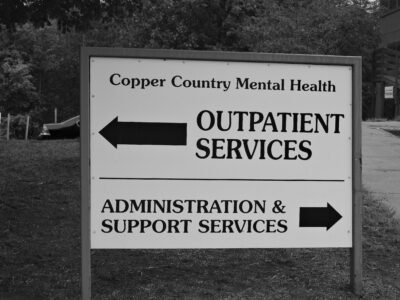
"If you're looking for help, I wouldn't be afraid of a diagnosis," said Jeff Williams, director of Outpatient Services at Copper Country Mental Health Services, in Houghton, "I wouldn't be afraid of all the terms involved with mental health because, really, what ultimately matters is somebody getting the help in returning back to the level of functioning that way want."
Like everywhere else across the country, Substance Use Disorder is a major issue in the western Upper Peninsula that continues to grow.
If the statistics released by FACE seem frightening, they are. Yet, a person does not have to die from an overdose. There is hope, there is help and recovery is possible.
Williams said if a person thinks they have a substance use problem, the simple solution is to see somebody.
"They will walk you through all the help that you need, what the problems mean," he said, "along with all of the terms, definitions."
During Addiction Recovery Month, one of the catchwords repeatedly used is stigma. Reducing stigma begins with educating people.
There is a lot of stigma attached to diagnoses, said Williams. But a diagnosis is simply used in counseling, therapy and psychology as a means of communication.
Those words and terms, unfortunately, carry a lot of weight for many, but they do not really need to.
The terms and definitions matter to a lot of people, said Williams, because of stigma. Many clinicians do not like to make a diagnosis, because of the stigma attached to a lot of these things, he said.
"And I agree with that," he said. "Where these diagnoses come into play is that they help people communicate."
For instance, he said, talking about comorbidity: "Okay, we understand that there's this problem and it's affected by this and they interchange on each other."
Whether discussing the differences and similarities of terms, mental health, mental illness, brain disorders, Williams said they are often used interchangeably.
""For our purposes, mental health and mental illness can mean the same thing," said Williams. "Mental illness has a little bit different connotation, because it's an illness that puts it more into a medical area. When you say 'illness' it puts it into a medical model more than it does 'mental health'. They both can be considered mental illness.They're used interchangeably, but when you talk about an illness it kind of puts it into the medical model."
What matters is that whether SUD is a brain disorder, a brain disease, or an illness, recovering from an addiction is possible, which is what Addiction Recovery Month is about: Letting people know that they can recover from addiction and lead fruitful, happy lives.
But, what does addiction recovery look like and where does one start? For Williams, CCMH is just one facility of many, he said.
Approaching an addiction problem is a very difficult issue for people with the problem, said Williams. It takes an enormous amount to of courage for many. As director of Outpatient Services as CCMH, he has much experience with people questioning whether they have an addiction problem.
"Here, people come in," said Williams, "they're not ready for treatment, but they're here; they're thinking about it. They're on the edge of thinking more of 'what would it be like to be sober?' That's alright; if they're not ready they're not ready. That's a personal decision."
It is not us to push them. People can push all they want; family and friends and that's great, because that sometimes gets you over the hump and gets you thinking even more about it."
Williams said the place to start is with a phone call.
For anyone questioning whether they have a substance use problem, below are some resources that may help in moving forward to take the first step:
•Copper Country Mental Health Services/Northcare Network: Persons seeking access to mental health services may phone NorthCare Network Access and Eligibility toll free at:
1-888-906-9060 during regular business hours (8:00 a.m. to 5:00 p.m.) Monday through Friday, and speak to an access worker who completes a phone screening.
Persons found to be eligible for services are scheduled to meet with a clinician for a face-to-face intake assessment. This assessment will further determine if the individual is eligible for services and make recommendations for what services are appropriate.
• Houghton/Keweenaw Communities That Care: website: https://houghtonkeweenawctc.com/about call: 906-231-0734.
• Dial Help Community Support and Outreach Center: 24-hour access line- 800-562-7622 – dialhelp.org. Dial Help is a community support and outreach center that provides an array of substance use disorder and behavioral health services at no or low cost.
• NorthCare Network: 888-333-8030 – northcarenetwork.org. NorthCare Network ensures that every eligible recipient receives quality specialty mental health and substance use disorder services and supports through the responsible management of regional resources.
• Great Lakes Recovery Centers (GLRC): 906-228-9696 – greatlakesrecovery.org. GLRC provides substance abuse and mental health treatment for youth, families, and adults. GLRC offers a full array of recovery services including detox, residential, outpatient, and recovery housing.