Take the first step
Contacting an expert can open doors to recovery
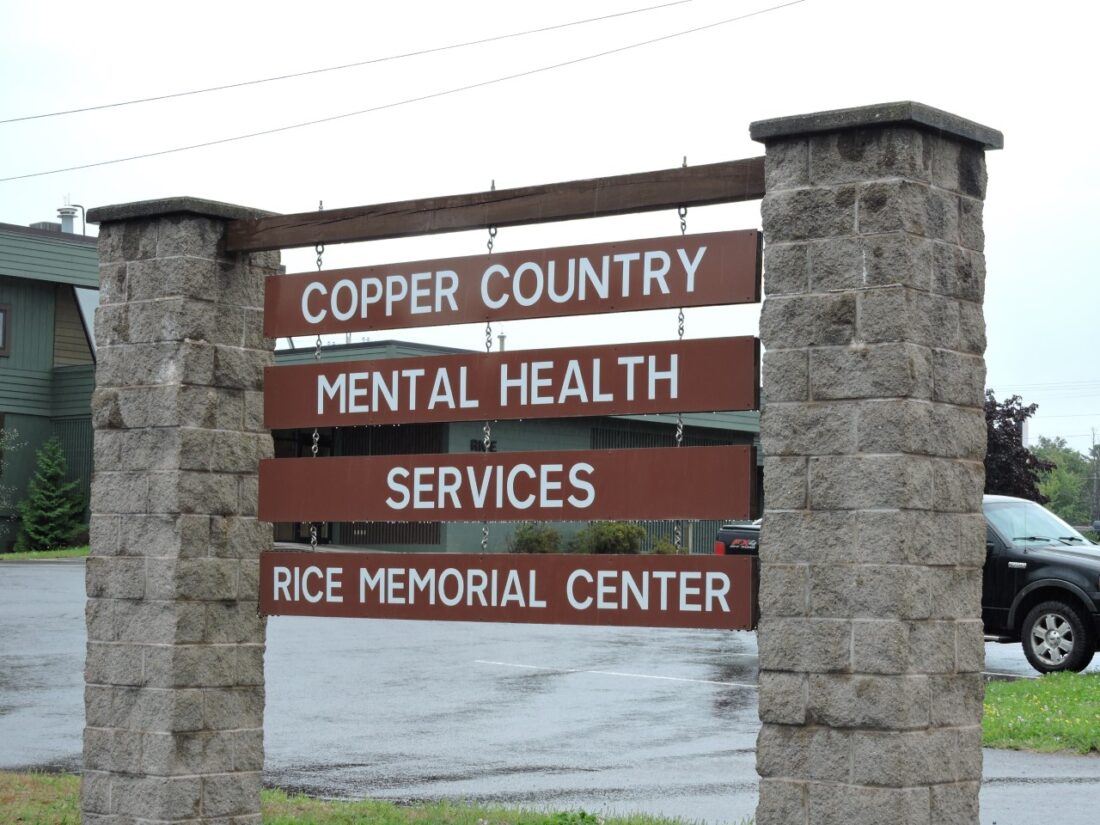
Graham Jaehnig/Daily Mining Gazette Copper Country Mental Health Services, in Houghton, is just one agency available for addiction treatment
[This is the third installment of a series that discusses ways to stop active addiction and that it is possible to recover and live a happy life.]
____________________
HOUGHTON — Addiction treatment is simply talking with a professional who talks with the person he or she is treating, to provide the person the skills they are lacking that are needed to return to a happy, productive life.
Someone suspecting they may have a substance use problem can begin to explore that question with a phone call. Whether to a pastor, a friend, or calling any number of local agencies, such as Dial Help, the Western Upper Peninsula Health Dept., or Copper Country Community Mental Health Services.
While making that phone call requires bravery and inner strength, it also a sign that the person still cares enough about themselves to question whether their substance use is a danger to themselves, the people around them, and their health.
The first step in the process has to begin with a phone call because it, of course, leads to the next step.
Outpatient Service Director Jeff Williams, with Copper Country Community Health Services, said that next step will involve answering some questions, which Williams referred to as screening.
“For mental health — I’ll say — it starts out with a phone call, usually,” he said. “Someone calling and saying ‘I’m wondering if I can come in and see somebody.”
Then there is a screening process, said Williams, that usually begins with something like:
“Tell me a little bit about what’s going on. Just give me an idea so that I can make sure I’m the appropriate resource for you and I don’t need to send you somewhere else.”
The next step, he said, if the person is in the right place, involves an assessment, which is used in determining what is driving the issue the person is experiencing.
The assessment, said Williams, looks at the biology of the person, such as a genetic history, in addition to looking at the person’s psychological state, “What drives in the inner person.”
These questions look at the person’s social atmosphere, what kind of, if any, supports they may have, such as if there is family nearby, relationships and dynamics with friends are all key.
“All of those factors kind of play into it,” said Williams.
The third step, after the phone call, and the assessment, begins with a treatment phase, which includes treatment and closure.
“Treatment,” said Williams, “not like Freudian psycho-analysis, which goes on for a very long time — therapy should be a period of time where there is a beginning and end.”
The therapy, is simply learning skills the person does not have, but needs to better function in society, at home, at school, at work, or where ever they may be.”
For addiction recovery, an assessment may recommend outpatient treatment or inpatient treatment. Williams said with inpatient treatment, the process may be longer because, inpatient treatment is usually for a longer duration. That depends on many factors.
Williams said the process is no different than going to a doctor.
“You go into a doctor,” he said, “and they’re going to assess you in the E.R. If you have a broken arm, they’re going to assess whether you can go to the Urgent Care Clinic, or wait ’til tomorrow.”
The screening done, the assessment complete, the doctor then treats the person, and sends him home.
Outpatient therapy, treatment counseling, whatever somebody wants to call it, said Williams, through the process, these are what the person can expect:
“A therapist that is non-judgmental, that is willing to meet the person where they’re at, and is able to work with the client, or patient.”
Therapy, because it focuses on the person, he explained, is person-centered.
“The therapist isn’t telling you that you need treatment,” he said, “You’re telling the therapist you need treatment and this is how you think it should be done.’ The therapist is likely to say, ‘Okay, let’s try that and see how it works.”
Williams said one point he very often makes with people is that recovery is a personal thing and sometimes a person just does not connect with another person.
“And that’s okay,” he said. “So, being able to have that conversation with a therapist, counselor, psychologist, or whoever you’re seeing, and saying, “i just think this is not going to work out; I think I’ll go see someone else.”
That is okay, said Williams. Shop around.
“Sometimes you just don’t connect,” he said, “you don’t have that one-on-one that is needed.”
Patients do that same thing with physicians every day, he pointed out.
Addiction absolutely can result from a traumatic event in a person’s past, said Williams. A therapist can also teach the person skills needed to think through the memories and effects of those past traumas.
“I think that most addictions probably do stem from some sort of problem in the person’s history.”
That is where the ugly word “comorbidity” comes in: A person becomes addicted to a substance (the condition of suffering from a disease or medical condition — referred to as a morbidity), as a result of trying to cope with past traumatic experiences (PTSD, another morbidity), and in recovery therapy, both issues are sometimes treated simultaneously.