
Raising concerns!
Hancock deals with invasive plant
Trending
HANCOCK -- Porvoo Park can be a great place to relax by the waterfront, let children play, or listen to a Canal Rock Friday night concert. However, the invasive plant spotted knapweed was spotted in Porvoo Park by Department of Public Works (DPW) employees.
DPW Manager John Erickson said two weeks ago was the first time the plant species was spotted in Hancock's public parks. "Somebody had sent us an email saying there was some kind of invasive species, so we just weed whacked it and it seems like its gonna go away for the rest of the year," he said.
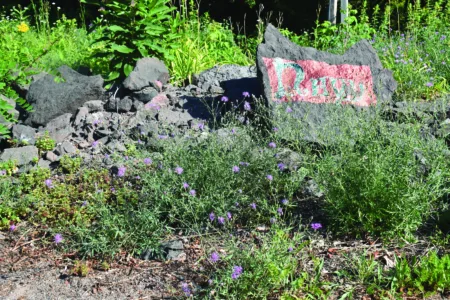
According to the Michigan Department of Natural Resources, despite its beautiful purple color, the Eurasian-native spotted knapweed is poisonous to other plants, creating barren areas where only knapweed grows. It is a threat to pastures and dry ecosystems including prairies and dunes. It can also irritate the skin.
Spotted Knapweed can be described as an herbaceous, bushy, perennial plant growing 2-3 feet, elongated, blueish or grayish-green leaves divided into lance-shaped lobes with pinkish, purple flowers are thistle-like and bloom from July thru Sept. It has long, stout tap-root can send shoots to start new plants and seeds which are carried on fine white tufts emerging from the plant base.
Keweenaw Invasive Species Management Area (KISMA) Coordinator and Michigan Tech Research Assistant Professor Sigrid Resh said Spotted Knapweed primarily grows in dry, developed areas near roads. “We have all of these road edges and open areas that people have created," she said. Every time you put a trail in that's wide enough so that the forest canopy isn't over it, you're going to get Spotted Knapweed."
According to Resh, the purple Spotted Knapweed species is not the only one in Michigan. Russian, Diffuse and Brown Knapweed are in the state as well.
Resh said KISMA has worked with other conversancy organizations to curb this issue, especially in drier, more-developed areas. "We have worked with the Michigan Nature Association and a little bit with the Nature Conservancy to remove Knapweed along the beaches," she said. "It's not a type where you dig it up and remove it. It has a long-living seed bank and its constantly being brought in."
According Resh, removing the species from Porvoo so it does not spread requires caution and ingenuity. Erickson said he and the DPW have a plan to halt the invasive plant from repopulating into other areas. "We're gonna have to try and find some kind of a spray that we can spray on there, but I'm sure were gonna have to make sure it's okay because it's close to the water," he said.
According to Erickson, the DPW is looking into different ways to tackle the problem safely, including contacting the supplier of the city's chemical concentrate, or contracting a local landscaping company.
However, Resh said any amount of chemical removal close to the water could be dangerous. "There is no chemical solution that isn't going to disturb the water," she said. "Whatever you use -- Glyphosate tends to be the most readily available chemical -- it can be far more mobile in sandy soil."
While chemical solutions are the most common when dealing with invasive plants in developed areas, Resh said KISMA tends to advise different practices like manual plant removal with gloves. Although, it's not always possible to do in less rural areas due to the labor required, she said. "You can't attack development because people need houses. But, you can create more sustainable development ideas."
You can report sightings of Spotted Knapweed -- or any invasive plant species -- to your local DPW or by using the DNR's invasive species tool found online at its website.