
The addicted Brain
Help is available
Trending
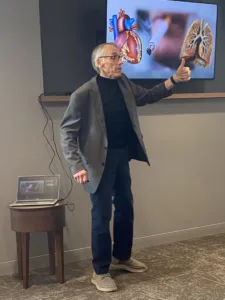
HOUGHTON -- “There’s nothing wrong in asking for help.” That was one of the takeaways from the latest in the “Ask a Doc” series sponsored by Aspirus Health. Dr. Kirk Klemme, who is Board Certified in addiction medicine, presented “The Addicted Brain.” In his 90 minute presentation, Klemme touched on scientific research, behavioral medicine and personal experience to address several addictions -- from opioids and fentanyl to non-substance addictions such as gambling and pornography.
Klemme explained the physiology of addiction saying it is based on the “reward system,” which is, in itself, based on the survival of the species. He explained the so-called “bliss point,” which leads people to addiction, whether its drugs, alcohol or even fast food. “The biggest part of the food industry is to get us to want more,” he said.
Klemme said the basis of many 12-step programs, such as Alcoholics Anonymous, is “Recovery is simple … but not easy.”
In discussing alcohol abuse, which he termed “the mother of all addictions,” Klemme said women are more prone to alcohol related liver disease than men. “Alcohol affects high blood pressure, has a significant impact on breast cancer, disrupts the sleep cycle and can lead to sleep apnea.”
Klemme outlined the progression of any addiction, among them:
• Impaired control
• Cravings
• Preoccupation with using
• Giving up activities they used to care about
• Using more and/or using more often
• The inability to successfully complete tasks
“Addiction takes and takes -- until it takes your life,” Klemme said. He addressed other addiction disorders in addition to alcohol, such as cannabis (“legal doesn’t mean harmless”), smoking and vaping (“a little better than smoking but still not safe”).
Klemme said one behavioral addiction that is categorized with substance abuse is gambling, “Because it’s everywhere.”
Klemme addressed several current drugs used to address addiction including naloxone (Narcan), a drug that rapidly but temporarily reverses the dangerous effect of an opioid overdose.
He had encouraging information regarding suboxone a prescription medication containing both naloxone and buprenorphine. “Suboxone is close to a magic bullet,” Klemme said. “It reverses withdrawal symptoms, reduces cravings and ties up the opioid receptors.”
He said buprenorphine is used to treat opioid use disorder because it is “so safe you almost can’t overdose.”
Finally, Klemme addressed recovery calling it a “three legged stool -- Counseling, 12-step programs and peer support.” He said, again, that recovery is simple but far from easy. “The only thing you have to change … is everything.”
He listed the four “Ls” that often lead people into recovery “Legal, Liver, Lover, Livelihood.” According to information provided by Aspirus, effective treatment may include:
• Counseling or therapy
• Peer recovery support (12-Step groups)
• Medication when appropriate
• Mental health treatment
• Support Groups
• Harm reduction strategies
• Family support
“The time to get people help -- is when they’re looking for help,” Dr. Klemme said. His office is located in the Aspirus Houghton Clinic, 1000 Cedar St. in Houghton, (906) 587-1710.
“The bottom line is, people have to be ready for recovery. There is no magic bullet.”