
A taste of tradition
KBIC's wild rice camp
Trending
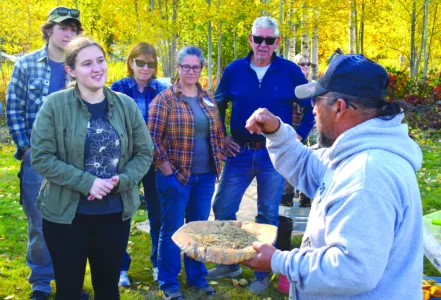
L'ANSE -- Dozens of people participated Saturday in the Keweenaw Bay Indian Community's (KBIC) Manoomin Wild Rice Camp. The annual events featured a full day of tradition and the preservation of cultural practices. Tribal leadership spent the morning and part of the afternoon instructing folks on how to dry, parch, separate and process wild rice -- through the traditional practices of the Anishinaabe people.
KBIC Water Resource Technician and Wild Rice Chief Roger LaBine said his goal is passing down the knowledge from his ancestors to younger generations. "Up until the other day, I didn't believe in AI," he said. "But, I heard a different definition of AI, which is Ancestral Intelligence, which is what I carry. I carry that knowledge from my ancestors and from my elders, from my relatives. It was gifted to me to give to everybody else."
There are four distinct steps in processing harvested wild rice: drying, parching, jigging and winnowing. Once the wet rice is dried, it is heated up and stirred in a pot. It is then danced on by moccasin-clad workers, which separates the grain from the shell. The winnowing then tosses the excess into the air and keeps the broken-up grains in a basket for later-use.
Alternatively, a thrasher (also called a Manoominator) can mechanically break up and separate the chaff from the grain. Expelling the shells into the air and onto a tarp for other uses.
Mark Sherman, who manned the Thrasher, said lately he has had to become a lot more reliant on making his own food, either through his garden or buying local. "A lot of people are realizing that, especially after COVID, that your food just doesn't magically appear and it can be threatened," he said. "Learning how to grow your own food -- that's important."
Kathy Smith sat next to the parching station Saturday, speaking with folks about the process and educating on-lookers about the benefits of local food. Smith said wild rice is slowly being reintroduced into the ecological landscape in Michigan. "Being able to bring rice back on the landscape, it's really rewarding," she said. "It shows our community that we are about our good, clean foods, because the price of food is so expensive now."
Smith added the mix of economic and traditional reasons is why these practices are so important. Wild Rice is a part of the four ceremonial food groups, along with corn, wild berries and game.
Those outside the tribe who attended the camp included interested community members and Michigan Tech students. One student, Oliver Hanson, said a friend brought him to the camp and he was grateful to learn outside of the classroom. "I learned a lot about the wild rice actually. It's been cool," he said. "That constraint of the class room... we just get too learn about some cool stuff in the middle of nowhere."
Another event-goer, local educator Lydia Vander Kooi said learning about unfamiliar cultural practices expands her worldview. "As long as America has [been] America, indigenous people have been pushed away and tried to be assimilated," she said. "I think it's really important to come back to the people who were here first and learn their practices and appreciate way that they connect with their food and the world around them."
The camp broke for lunch around noon, participants were fed various dishes made with traditional ingredients, including squash, rice and wild game. LaBine said keeping these traditions alive and spreading them throughout the community helps everyone.
"A lot of this knowledge wasn't being passed down or wanted to be passed down. But, we are reviving it," he said. "In order for us to do it, we also find that the tribal communities can't do it alone. So it's got to be everybody. Everybody in all of the communities."