
Trending
HOUGHTON -- The National Fire Protection Association is spreading awareness about safe lithium-ion battery charging during Fire Prevention week, which is Oct. 4-10.
Houghton Fire Chief Eric James said the most important way to keep yourself and your loved ones safe is proper storage of lithium-ion batteries and devices. "The safest practice is to charge them and then when they're charged, take them off. Don't leave them connected," he said. "Especially any of the appliances, scooters, or bikes and stuff. Anything you can charge outdoors and not inside of a building is the safest way to go."
The NFPA's theme for Fire Prevention week this year is "Charge into Fire Safety™: Safe Charging Is a Superpower!" While charging is one thing, identifying what qualifies as a safe lithium-ion battery is another key for safe storage. James said looking closely at your device when you purchase it is essential.
"If you look at any electronic device on your desk and you flip it over, in the little signed print you'll see a little UL symbol," he said. "That means that the Underwriters Laboratory has tested it and verified that the components are safe and it's not going to catch on fire."
Disposal is something James said he is concerned with as well. He suggests storing dead or defective batteries in non-flammable storage containers. "You definitely do not want to throw them in the garbage," he said. "If the lithium batteries get compacted in the garbage trucks, they will ignite."
According to James, the Houghton Volunteer Fire Department has not had any major accidents happen with lithium-ion batteries. Although he has had calls about batteries. James said he urges caution when it comes to purchasing and storing these devices.
"Some of them might have been from maybe some experimentation on behalf of the local engineering students," he said. "We've been fortunate there hasn't been a bunch of counterfeit or non-UL approved scooters and bikes. That's a big concern. The stuff we have seen has been -- I believe -- accidental."
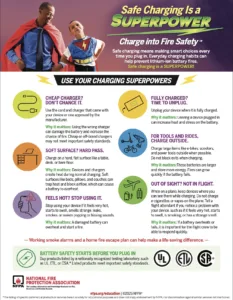
Here are some tips the NFPA are suggesting to keep yourself and your loved ones safe:
Use the cord and charger that came with your device or ones approved by the manufacturer. Using the wrong charger can damage the battery and increase the risk of fire.
Charge devices on a table, desk, or other hard, flat surface. Do not charge them on beds, couches, or under pillows. Devices and chargers produce heat during normal charging. Soft surfaces can trap heat and block airflow, which can cause the battery to overheat.
Stop using your device if it feels very hot, starts to swell, is smoking, or has a strange smell. These are warning signs that the battery may be damaged or failing.
Unplug your device when it is fully charged. Do not leave it plugged in longer than needed. Leaving a device plugged in too long can increase heat and stress on the battery.
Charge larger items like e-bikes, scooters, and power tools outside and away from exits. These batteries are larger and store more energy. If they fail, fires can grow quickly and spread.
When on a plane, keep your device where you can see it while charging. Do not charge devices in overhead compartments. Do not charge e-cigarettes or vapes on a plane. If a battery overheats or fails, it is important for the flight crew to respond quickly.
For more information about fire prevention, visit the NFPA's website at nfpa.org.