Counting Burbot
DNR and Tech partner for angler survey
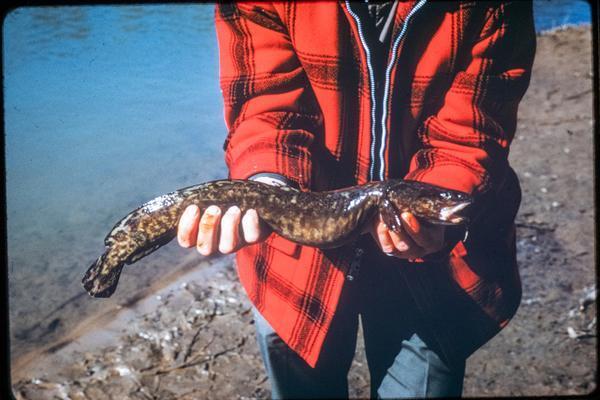
Michigan DNR photo Until recently, the burbot was an unpopular fish among anglers. As they are rapidly gaining in popularity, however, the fish, the only freshwater cousin of the cod, is becoming an increasing focus of conservation efforts and study.
HOUGHTON — Researchers at Michigan Technological University are partnering with the Michigan Dept. of Natural Resources (DNR) to conduct a survey and interview anglers to gather information on awareness, values and preferences for recreational burbot fishing within the Lake Superior basin. According to a DNR press release, the information can help fisheries managers balance sustainable harvest and angler satisfaction. The Lake Superior basin in the U.P. includes portions of Gogebic, Ontonagon, Houghton, Keweenaw, Iron, Baraga, Marquette, Alger, Luce and Chippewa counties.
The survey is part of a research study conducted by Assistant Professor of Biological Sciences Jill Olin and PhD student Greyson Wolf according to qualtrics.com. This research is funded by Michigan Sea Grant.
Studies at MTU are mapping spawning habits and distinct subpopulations, while studies at Northern Michigan University are analyzing young fish movements and migration.
In Feb. 2024, Olin was named the principal investigator on a project that has received a $193,533 research and development contract from the GLFC, according to Michigan Tech’s Biological Sciences Blog. The project is titled “Assessing population structure and the role of burbot in coupling nearshore and offshore habitats of Lake Superior.”
In Nov. 2025, The Great Lakes Fishery Commission (GLFC) said burbot, previously overlooked for their “ugly” appearance, has become a desirable target by anglers in recent years. In response, some fishery management agencies have recently implemented harvest limits. In Minnesota, for example, limits were introduced in 2025.
At the same time, it was reported thet GLFC-funded research at Michigan Tech is uncovering new insights about the species through two different projects. Wolf is working with anglers to understand their changing perception of the species and better grasp what fueled the increase in popularity. Wolf will also examine how anglers are reacting to changes in regulations of the species. MTU PhD student Grant Dlesk, on the other hand, is investigating burbot genetics to determine if they could have genetically distinct subpopulations throughout Lake Superior and its connecting rivers.
In a July 14, 2025 memorandum, the DNR stated: In recent years, a growing number of anglers (including fishing guides) have targeted spawning burbot in shallow waters near river mouths and preferred spawning habitat areas – waters less than 15 feet. Managers have noticed an increase in social media postings of large numbers of burbot caught (30 fish or more) in late night fishing trips that have targeted spawning balls of burbot males competing over ripe burbot females.
“Without a daily possession limit, many burbot are being documented as harvested fish jeopardizing the sustainability of some burbot populations,” the memo states.
The memo also states fishery managers are recommending adding greater protection to burbot which are native to the Great Lakes and the region.
In the same memo, the DNR authorized the Natural Resources Commission to issue orders regulating the burbot, establishing a daily possession limit of five burbot per angler in all state waters, as of April 1, 2026.
To participate in the DNR/Michigan Tech survey, use the URL https://bit.ly/48ZRlpJ.