Sault Tribe adopts moratorium on data centers
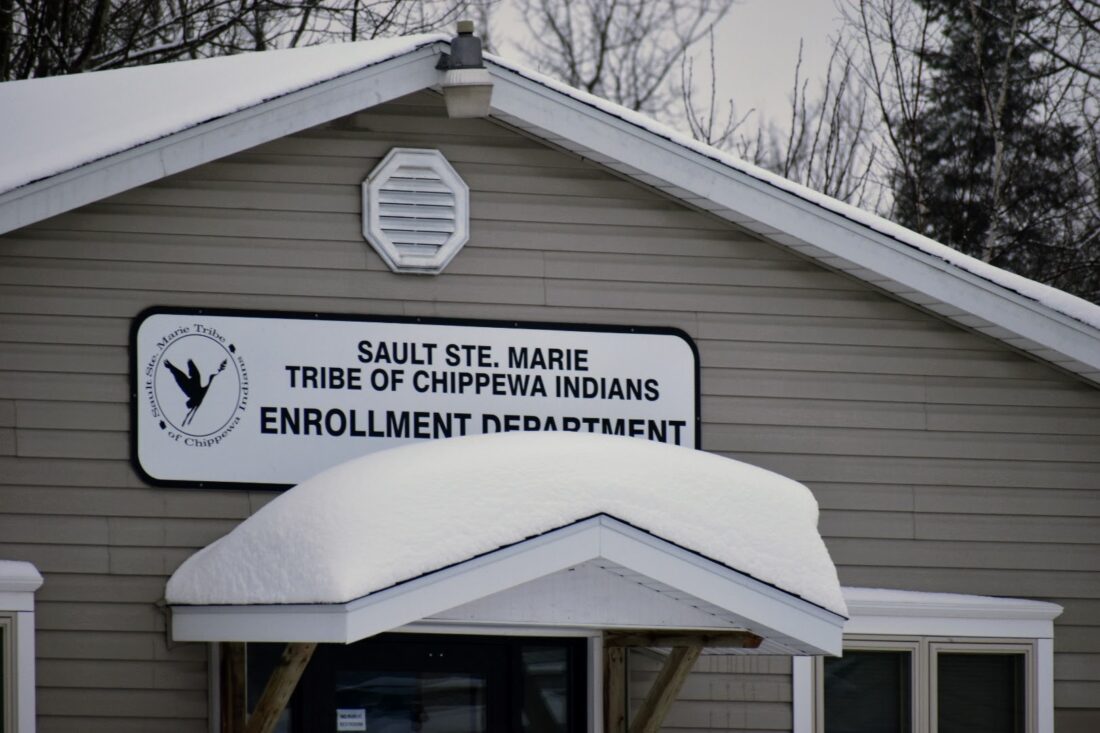
Sault Tribe government sign, Feb. 7, 2023 | Laina G. Stebbins
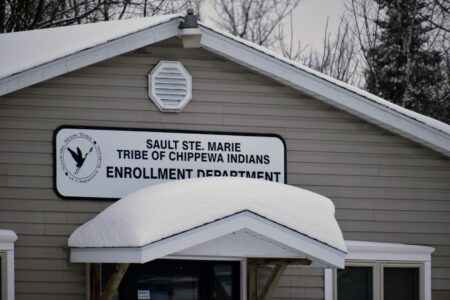
SAULT STE. MARIE– Members of the Sault Ste. Marie Tribe of Chippewa Indians Tuesday voted unanimously to approve a moratorium prohibiting the development of artificial intelligence data centers on tribal lands.
Citing concerns about the strain these facilities place on local resources, concerns about long-term land use impacts and uncertainty on whether a facility would yield long-term economic benefits, the moratorium will remain in effect indefinitely, or until it is explicitly lifted by a future board resolution.
However, any resolution to lift the moratorium would need to follow several other steps, including:
•A comprehensive Tribal impact assessment;
• Environmental and cultural resource evaluations;
• An infrastructure and energy capacity analysis;
• A robust community consultation and input process.
Chloe Kannan, the director of EUP Solidarity and a member of the tribe, said she had been working with other community organizations to educate residents on how to work proactively to ensure their community is involved in decisions around data centers, and how to prevent projects from being built in their communities.
After receiving word that there would be a closed-session strategic planning meeting on March 23, followed by a board vote the following day to adopt a strategic plan, which included discussions on data centers, Kannan said she raised the alarm.
References to data centers were ultimately removed from the strategic plan, Kannan said, but community members in attendance at the board’s March 24 meeting went further, calling on leadership to pass a moratorium on data centers. Director Bridget Sorenson and Kimberly Hampton went on to sponsor the resolution.
Ahead of the vote, several community members said there was no truth to fears that the Tribe was looking into building data centers in the community, with Sault Tribe Chairman Austin Lowes saying there was “never a proposal to build a single data center.”
However, an excerpt from the previous strategic plan, which Kannan says she obtained from a member of tribal government, states that the tribe’s economic development corporation is “currently in the discovery phase with Innova Capital Partners, to develop a site for a data center on M-28.”
Innova is a global investment firm, based in New York. Its portfolio includes investments into artificial intelligence, Bitcoin mining, data centers and energy storage.
Another excerpt, reviewed by Michigan Advance, lays out the strategic rationale for building data centers on Tribal trust land, stating “Locating data centers on trust land can significantly reduce permitting timelines by eliminating state and local layers, creating a compelling value proposition for partners.”
At Tuesday’s meeting, Director Mike McKerchie pushed back against arguments that efforts opposing a data center were pushing fear within the community.
“I will comment that we all heard the EDC CEO state, it was in the strategy plan, the strategic plan, and it’s no longer in the strategic plan, and it got removed. It got removed because people spoke up,” McKerchie said, later noting “there was a reason why it was in the strategic plan in the first place, and there was a reason why it got taken out.”
A voicemail left requesting an interview with Lowes was not returned.
Another excerpt from the since-amended strategic plan lists broadband and digital infrastructure, real estate, energy, data centers and “other capital-intensive platforms where structural demand, regulatory advantages and professional operating partners support durable performance” as the economic development corporation’s priority sectors.
Kannan said the community has demanded to know whether there were non-disclosure agreements tied to these data center discussions, along with the release of the sections removed from the strategic plan, and that the lack of transparency matches a pattern she’s seen in other communities fighting back against data centers.
“People need to know that leadership was actually being dishonest about how far along that they were,” Kannan said. “And so I’ve made a decision to blow the whistle on this.”
Kannan said she wants to believe in the moratorium, but questioned how far along a data center effort would be if that information hadn’t been shared with the community.
“People assume, ‘Oh, tribes are immune to this.’ Tribes are not immune to this,” Kannan said, arguing no one is immune to the lure of trillion-dollar forecasted investments.
“There’s no amount of money that should sell out our land, our water, and our non-human relatives, both as Anishinaabe people, but also people who live here in the Upper Peninsula of Michigan, on the largest body of freshwater in the world,” Kannan said.
She said the fight against data centers presents a dual front, both on trust lands and off, noting that she and other community members would be attending the Chippewa County Commission meeting next week to ask them to weigh in on either a ban or a moratorium on data centers.
“There are some communities, like Bay Mills Indian Community, they made a really strong stand,” Kannan said, noting that it had instituted a ban on data centers rather than a moratorium.
These concerns stretch beyond the Sault Tribe to the entire state, Kannan said, stressing that until these projects are made transparent, everyone should be skeptical.