
A growing problem: Managing invasive buckthorns in the Keweenaw
Trending
Some human impacts on the land eventually fade into memory. Ruins crumble and are reclaimed by the soil. Old logging roads are filled in as forests regenerate. Others, however, do not fade, but instead grow over time--setting off a cascade of rapid change.
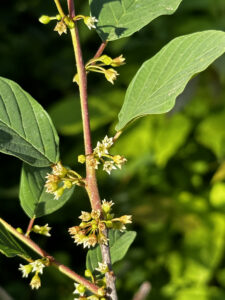
Common buckthorn (Rhamnus cathartica) and glossy buckthorn (Frangula alnus) are examples of a growing problem throughout Michigan and, more recently, in the Keweenaw. Originally brought to North America in the late 1800s, buckthorns were praised as fast-growing ornamental shrubs to be used for fencerows and windbreaks. These very qualities we praised in the past are the same ones that make them such a threat today.
Buckthorns are fast growing and adaptable. They thrive in woodlands and fields, in sun and shade, in soggy and dry ground, and in loamy and sandy soil. They are aggressive colonizers, outcompeting native species and producing copious clusters of fruits, which birds readily eat and spread. However, many birds rely on native insects to feed their young. Since those insects do not commonly feed on buckthorns, birds have a harder time finding food for their nestlings when buckthorns invade.
Collaborative management with the help of a generous donor
Learn how to identify buckthorns, and you will start to see them everywhere. And if you start to see them everywhere, you may be inspired to act--like one generous, anonymous donor who is helping the Keweenaw Land Trust (KLT), Keweenaw Invasive Species Management Area (KISMA), and Swedetown Trails Club manage glossy buckthorn this summer. They experienced a stunning realization while on a local trail late last fall. They were surrounded by green-leaved trees--every one of them buckthorn. "I wasn't looking for it because I didn't realize it was even here... It shattered my illusion of this place," they marveled. Having witnessed the massive changes buckthorns have caused in other parts of the Midwest, they felt that now was the time to act.
Time is indeed of the essence when managing invasive species: it is going to take more than one field season to tackle this growing problem. But the work that KLT, KISMA, and Swedetown does now will be an important step in slowing the spread. The groups are aiming for two major management pulses this spring and fall. Spring will focus on reducing seedbanks and cutting dense patches, with follow-up cutting and cut stump treatments in the fall, when identification is easier due to buckthorn leaves staying green later than most native shrubs.
What can you do to help?
Get involved by volunteering at upcoming workdays at the Swedetown Trails. Hosted by KISMA in partnership with the Swedetown Trails Club, these Healthy Forest, Healthy Community events will take place every Friday from 1:00-3:30 p.m. (June 5 to August 14), meeting at the Main Trailhead & Chalet for an easy walk to the glossy buckthorn removal site.
KLT and KISMA are also hosting a Second Saturday JUNE! volunteer workday on Saturday, June 13, from 10:00 a.m. to 1:00 p.m. During this event, we will use a high-cut method to prevent buckthorn from setting fruit and plant native species in previously treated areas to help restore the forest understory.
You can find more information by following KLT, KISMA, and the Swedetown Trails Club on social media, joining our email lists, and visiting our websites.
Learn more about priority invasive species identification and management. KISMA is hosting an invasive species field day event on June 18 from 10 a.m. - 2 p.m. (https://events.mtu.edu/event/invasive-species-identification-management-field-day). Visit KISMA's website for other events and to learn more: https://www.mtu.edu/kisma/
Replace invasive buckthorns and other woody invasives in your yard with native trees, shrubs, and plants to feed our native insects and birds. By joining KISMA's Go Beyond Beauty Hub as a private landowner or as a business professional with a landscaping or nursery business, you will receive free signage and information on how to support native plant and wildlife communities (https://www.gobeyondbeauty.org/kisma.html).
Tiff DeGroot, Ph.D. (Community Engagement Manager, Keweenaw Land Trust); Troy Tofil (Assistant Coordinator, Keweenaw Invasive Species Management Area (KISMA)); Sigrid Resh, Ph.D. (Coordinator, KISMA)