
Trending
The old deer camps rarely died all at once. First came the passage of time, then the passage of the old generation, and finally the passage of the cabin itself.
Every November, the numbers tell a quiet story of erosion. Statewide deer license sales have declined from more than 800,000 three decades ago to just over 600,000 today, according to demographic studies conducted by Bridge Michigan. Across the Upper Peninsula, aging hunters and declining youth participation are hollowing out a once-rich tradition--what I will refer to as deer camp culture.
I did not grow up inside that culture, though I witnessed it once more than forty years ago when a brother-in-law invited me along to hunt at a camp owned by his father, brothers, and brothers-in-law.
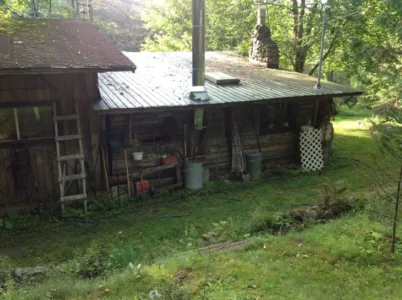
It was a story-and-a-half, one-room house tucked into the timber, lined with beds along two walls, a wood stove, a wooden table, and a sink beside a crude cupboard. Outside, the beds of the pickup trucks each carried a layer of Blatz beer quart bottle cases, while the groceries rode inside the cabs to keep from freezing. Inside, cards never left the table.
For generations in the Copper Country, stepping into a room like that was a rite of passage that began in early childhood. A boy knew he was on his journey when he found a BB gun under the Christmas tree. It meant quiet afternoons in the yard with just him and his dad. Then came the .410 shotgun--a promotion from plinking at tin cans to walking the brush for partridge. It was real experience and the beginning of an inheritance. Eventually, it was time for the .22 rifle: precision shooting, quick aim, and quick fire at snowshoe hares darting through the winter timber.
Yet it was that first time a father invited his son to deer camp that sealed the journey. It was an unspoken declaration: You're grown now. Come sit with the men. Leaving behind warm beds, electric lamps, and central heating, a teenager stepped into a primitive cabin to take a seat as an emerging equal beside his dad, uncles, cousins--the veteran hunters.
At night, after the hunt, when eight or ten grown men were squeezed into a tarpaper cabin meant to hold four, the richness of the culture came alive in the yellow glow of a kerosene lamp. Elbows bumped over a scarred wooden table. The air hung thick with the smell of woodsmoke, damp wool, and venison stew simmering on a cast-iron range. Heavy socks steamed from rafters strung above a crackling stove--often a 55-gallon steel drum welded together with scrap iron by some mining company shop smith.
In that cramped warmth, the talk rarely lingered on the shot or the buck that got away. Instead, between the slap of cards and the steady rhythm of a cribbage count--fifteen-two, fifteen-four, and a pair makes six--the boy absorbed his family's history. He heard the oral traditions passed down from grandfather to father to son, learning how these camps were born out of grit, necessity, and as a temporary retreat from the real world.
In the late 19th and early 20th centuries, miners and loggers patched up abandoned timber shanties or hammered together rough shelters on cutover lands. During the hungry years of the Great Depression, many of those primitive shacks were intentionally left unlocked, offering dry kindling, a roof, and whatever canned goods remained for out-of-work men passing through the woods.
There is a story from those hard years--one I heard independently from two old-timers at opposite ends of the Copper Country who never knew each other--about a county game warden making his rounds through the local village saloons. Before heading out the door, he told the bartender, loud enough for every man in the room to hear: "Tomorrow, I will be home spending the day with my family. Home all day." Every man at that bar understood. Those who could not afford a license were free to go out and put meat on the table for their families.
By mid-century, state game laws reflected that family deer camp communal spirit. According to historical wildlife archives from the Michigan Department of Natural Resources (DNR), regulations from the 1930s through the mid-1980s permitted “camp deer” or party licenses, allowing an organized crew to harvest one extra deer strictly to feed the table for the week--a practice the DNR phased out in 1986.
Today, that way of life faces pressures that did not exist forty or fifty years ago. Life moved slower then, and camps sat on old abandoned family farms passed down through generations. Over the decades, many of those properties were sold off to pad a 401(k) or pay a child's college tuition. Meanwhile, the fathers and uncles who bound the camp together passed away. A century ago, a boy graduated from high school and went to work alongside his dad at the same mining company. Today, young people often move out of state after college, leaving home--and the old rituals--behind.
Sometimes the end comes even more abruptly. Years after I sat at that scarred wooden table listening to the older generation, a distant family member began bringing his teenage friends out to the camp to drink and raise hell. Tired of the damage and unwilling to carry the liability, the owners burned the cabin down themselves. It was never rebuilt.
What disappears when those camps go dark cannot be replaced by a screen, a text message, or a rushed holiday visit. Without that shared table, the quiet intimacy between fathers, sons, brothers, and uncles--built shoulder to shoulder over firewood, venison, and a kerosene-lit card game--simply fractures and fades.
As fewer young hands step up to split the firewood, patch the stovepipes, and keep the camp ledgers alive, veteran woodsmen know the region is losing far more than a hunting season. When a deer camp burns to ash or closes its shutters for good, a family loses one of the last rooms on earth where men across generations sit free of rush, learning who they are, where they came from, and how they belonged to one another.