F1 Review: Piastri spices things up in Japan
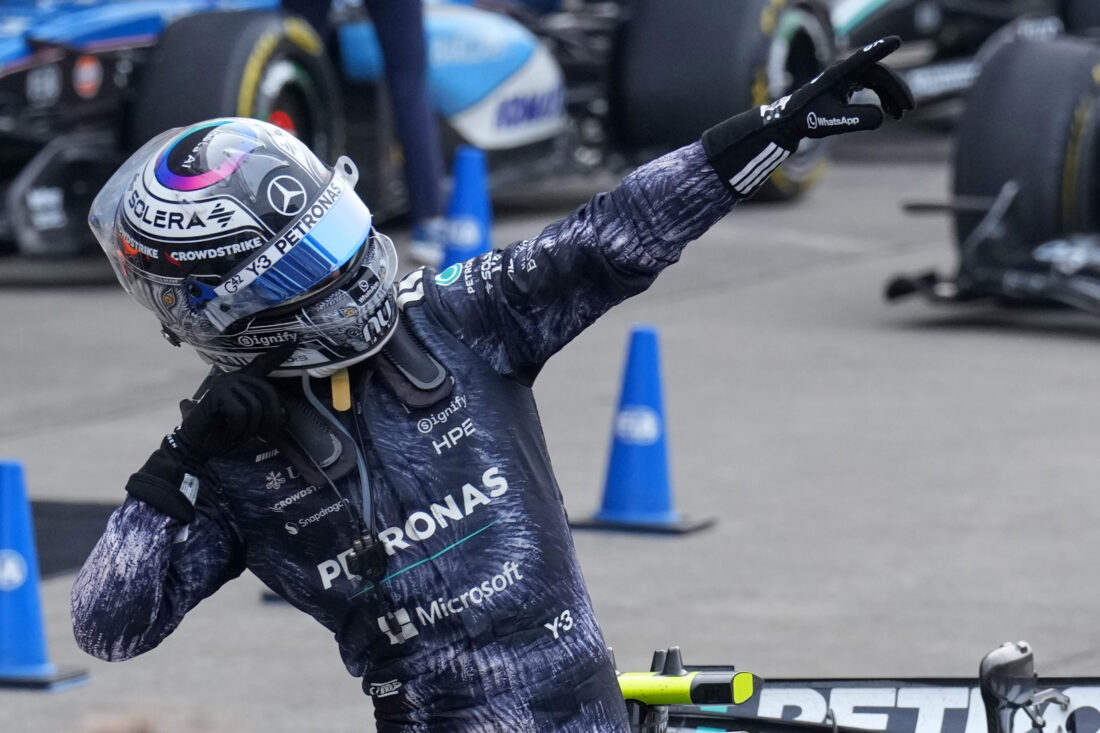
Mercedes driver Kimi Antonelli of Italy reacts after winning the Japanese Formula One Grand Prix at Suzuka in central Japan, Sunday, March 29, 2026. (AP Photo/Hiro Komae)
JAPAN — Many Formula 1 (F1) pundits were saying the race in Japan would simply be a race between the two Mercedes drivers once more. George Russell won the first race in Australia, and Andrea Kimi Antonelli became the sport’s youngest grand prix winner in China two weeks ago, cementing the dominance of their Mercedes cars.
Ever the optimist, I was hoping that other teams would quickly close the gap, figure some things out about the new regulations and how their components work on race days, and manage to compete with the Mercedes cars. The first practice session in Japan suggested I might be overly optimistic as Russell led Antonelli, and both were more than a tenth of a second ahead of all the other drivers.
Oscar Piastri, who has had terrible luck in the first two races, not starting either of them, managed to top the second practice session in his McLaren which surprised many, including myself. He was nearly a tenth of a second up on Antonelli and more than two tenths of a second up on Russell. The next closest car was Piastri’s teammate Lando Norris who was more than half a second behind.
The second practice session is the most representative of the three over the weekend for both the qualifying and the race because it takes place at a similar time of day and, barring large changes of weather, in similar conditions. Both Mercedes drivers took note of Piastri’s pace and said they had no reason to doubt the McLaren’s pace, seeing them as a legitimate threat for pole position.
Mercedes responded on Saturday when the third practice session showed they unlocked something more in their car. Antonelli finished with the best lap, two-and-a-half tenths up on his teammate Russell who was complaining about his car acting differently. Third place was Charles Leclerc in his Ferrari who could only get within 0.867 seconds of Antonelli and Piastri fell to just over a second behind the Mercedes.
Practice sessions are always hard to judge in F1 because there are so many different things teams might be testing, you never know how much fuel is in a car, and you can never be sure what power level teams are running their cars at. Also, the various modes like boost and overtake are available whenever teams want in practice, meaning cars can squeak out faster times than regular conditions would allow in a race or qualifying.
Antonelli’s dominance in the third practice session seemed like a stamp of authority, that the weekend was to be his once more. Would that come to pass in qualifying though? Leclerc kept everyone guessing as he topped the times in the first session of qualifying and Piastri kept pretty close to the times the Mercedes drivers were putting in.
By the end of qualifying, however, Antonelli reasserted himself and nabbed his second consecutive pole position. Russell managed to secure second position by about half a tenth of a second over Piastri who lined up in third. Leclerc qualified in fourth position with his teammate Lewis Hamilton lining up in sixth.
The Ferrari’s electric starts meant they could be a thorn in the side of the Mercedes drivers once more, and Piastri showed he might have something up his sleeve with his practice starts throughout the weekend. Hopefully that meant the start of the race would once more be exciting, but many suggested this would be a Mercedes win on Sunday.
As the lights went out to start the race, it looked like the two Mercedes had parachutes attached to the back of their cars as they drove away so much slower than everyone around them. Pole sitter Antonelli was in sixth place after a few corners, and Russell went from second to fourth.
At the front, Piastri managed to blast by the two Mercedes with Leclerc close behind. Norris got into third with Russell hounding him closely in fourth, then Hamilton’s Ferrari led Antonelli. Another miserable start for the Mercedes duo combined with lightning fast starts for the Ferraris and McLarens shook up the running order.
Despite the early excitement, it looked like the “normal order” might quickly resolve as the Mercedes cars blasted past their opponents. Antonelli drove by Hamilton quickly, but he soon was mired behind Norris who benefited from his overtake boost as he closely followed Leclerc.
Russell, on the other hand, managed to get by both Norris and Leclerc making the passes look simple. All the passing and repassing that Leclerc and Russell entertained fans with in the first two races were not to be this time as neither car had a response to Russell’s pace.
Continuing his forward charge, Russell also passed Piastri for the lead of the race soon after. However, unlike the two behind him, Piastri timed his battery deployment fantastically and repassed Russell on the next straight. Expecting the back and forth to continue, Russell actually just stayed behind Piastri from that point on, unable to mount another challenge.
Piastri was adamant on his team radio that if he maintained track position, he could actually win the race. In no way did he want to give Mercedes the chance to do an undercut, meaning they would come in for fresher tires first and use the pace of those tires to be ahead of Piastri when he pitted later, so the McLaren team decided to pit Piastri first.
A few laps later, Mercedes made the decision to pit Russell as well. Though he was unable to find the pace to get ahead of Piastri, they felt their only chance to beat Piastri on track was to get onto the newer tires as well and not let Piastri extend his lead on fresher tires.
The lap after Russell pitted, an accident unfolded on track. Oliver Bearman in a Haas was catching up Franco Colapinto’s Alpine extremely quickly due to different battery strategies, and when Colapinto shifted to the middle of the track, Bearman avoided and went into the grass. The slick tires on F1 cars do not do well trying to find traction in grass, and Bearman quickly lost control of his car, going into a very fast corner.
The impact into the wall registered at 50Gs, but fortunately the safety measures built into the car meant Bearman suffered no fractures or broken bones despite limping heavily when he extricated himself from his demolished car. A safety car period ensued.
Antonelli was able to take a pit stop that was ten seconds quicker than his competitors, and he went from fifth place in the race a few laps earlier to leader of the race. Once the race resumed, Antonelli never looked back and rocketed off to a gap of nearly fourteen seconds by the end.
Behind him, Piastri managed to keep a hold of second place and battery issues for Russell meant Leclerc was able to pass him for third place. A fourth-place finish meant Russell has his first race of 2026 not on a podium and meant he lost his championship lead to his teammate, the youngest ever leader in an F1 driver’s championship.
Piastri was on the radio to his team after his second-place finish saying, “Wow! Turns out when we start these things, we’re pretty good.” You could hear the tongue-in-cheek nature of his comment as he said it, lamenting what could’ve been if he had been able to start either of the first two races of the season.
While Antonelli showed the pace of the Mercedes is something fierce when it is in front, this race showed other cars in front can cause them some issues. Russell lamented the timing of the safety car suggesting if it was one lap earlier, he probably would’ve won the race.
Considering Russell fell back when Antonelli rocketed forward, I don’t know that I agree fully with his assessment, but we could continue the “what if” storylines further to wonder what would’ve happened without the safety car at all. Could Piastri have held on for a win? Where would Antonelli have ended then?
Regardless of the speculative nature of those questions, the fact is Piastri shook things up in this race and showed that other drivers can compete with the Mercedes. In the past few seasons, McLaren showed a prowess for useful development of their cars, and if they can outpace the competition, maybe they can get to the top step soon. Maybe Ferrari can. It will be exciting to find out.
Due to the conflict in the Middle East, the next two rounds in Bahrain and Saudi Arabia were cancelled, leaving April void of F1 racing. The next time cars are on track, it’ll be here in the U.S. The race in Miami is on Sunday, May 3, at 4 p.m. Eastern.
National Sports
Brewers rally for 6-2 win over Tampa Bay to spoil McClanahan’s first game appearance since 2023
MILWAUKEE — Gary Sánchez and Jake Bauers homered, Brice Turang drove in two runs, and the Milwaukee Brewers ...
F1 Review: Piastri spices things up in Japan
Rollins scores 24, Kuzma adds 20 and the Bucks beat Mavericks 123-99 to snap 4-game skid
MILWAUKEE (AP) — Ryan Rollins had 24 points, seven rebounds and nine assists, Kyle Kuzma added 20 points, and the ...
Tiger Woods a big topic again at Masters even without playing
Women’s Final Four a repeat of last season, headlined by undefeated reigning national champion UConn