
Manoomin traditions
Wild Rice Camp today
Trending
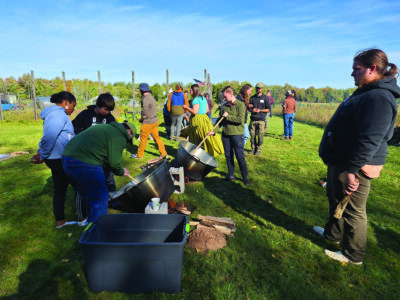
L'Anse -- While Keweenaw Bay Ojibwa Community College (KBOCC) offers education to its students within its facilities, sometimes its educational outreach extends outside the confines of the college’s walls and into its community. Each year KBOCC hosts the Manoomin (Wild Rice) Camp at Keweenaw Bay Indian Community's (KBIC) community garden. The event, which takes place today, is dedicated to preserving and educating on how the Anishinaabe prepared wild rice.
Wild rice has been a staple of the diet of Indigenous People of the Great Lakes region for centuries, and holds spiritual and cultural significance. Each stage of rice preparation is considered spiritual, and its end stage brings not only food, but something to utilize in ceremonies such as naming ceremonies at birth, seasonal ceremonies and for funerals. The rice also ties into the Anishinaabe migration story, which brought the people to the Great Lakes region from the East Coast.
The camp offers participants the opportunity to go through each step of rice preparation and explain the significance of each action leading to the crop's consumable state. The process begins with gidasigewin, or parching the rice. While roasting the rice comes out of its husks, and this is accomplished by stirring the rice in a basin with tools. Afterwards the rice goes through Bawishkam, which is dancing or jigging on the rice with moccasins. This separates the rice from its husks.
The rice then goes through nooshkaachigewin, or is winnowed in a basket while being flipped back and forth. This step also continues to separate rice from its husks. Once the rice is completely separated from its husks, it is then packaged and its preparers can take their rice home for a meal.
While all the traditional methods are taught, the camp does also include a modern method of ricing. A machine KBIC workers refer to as the "manoominator" can speed up the process of winnowing. The modern methods are not shunned, but the camp teaches the importance of how hard work results in something vital for survival.
At last year’s camp, KBIC's Outreach Coordinator Austin Ayres there are advantages of winnowing the traditional way. "When you put your own energy into it, instead of letting a machine run and do it, you are realizing that exchange of energy with yourself, the rice, the earth, and I think it just takes a lot more patience, and that's part of it."