Torch Lake cleanup update
Open House Oct. 7
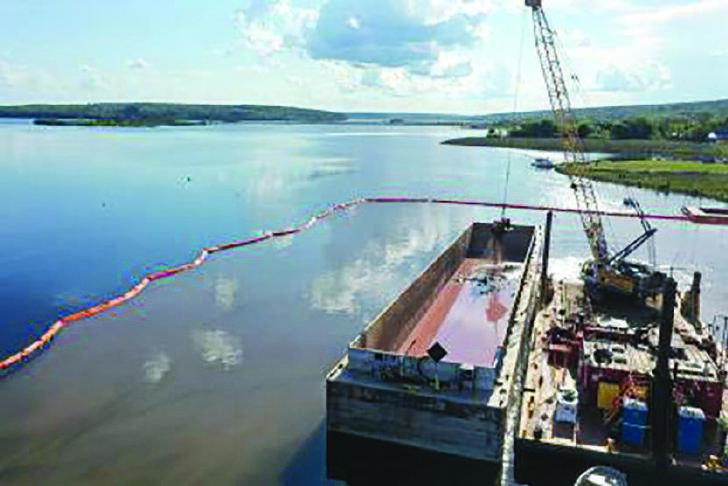
EPA photo Barrel removal work from Torch Lake last September.
LAKE LINDEN — The U.S. Environmental Protection Agency (EPA) and Michigan Department of Environment, Great Lakes, and Energy (EGLE) are inviting the public to an open house to learn about the Torch Lake Cleanup Project’s status and next steps.
According to a release from the Torch Lake Public Action Committee (PAC), EPA, Honeywell, and EGLE representatives will be at the open house to provide information and answer questions regarding the Torch Lake Cleanup including the Lake Linden Recreation Area and Hubbell Processing Area in Torch Lake.
Among three agenda items are the results of the drum removal pilot study performed last fall in the Hubbell Processing Area.
The EPA completed a Drum Removal Pilot Study in the Hubbell Processing Area (HPA), which is the former site of the Calumet and Hecla copper processing facility. The area is contaminated primarily by high levels of copper, heavy metals, PCBs, and polycyclic aromatic hydrocarbons in the sediments and shoreline. The EPA refers to the location as a Torch Lake Area of Concern (AOC).
In Sept. 2024, EPA contractors removed 100 drums, debris and sediment from three areas at different water depths and performed extensive monitoring and sample collection. Contaminated sediment and other debris were removed from the three target areas. The removed drums, sediment and debris were temporarily staged at the former Mineral Building property before being transported to a disposal facility. Barges, a crane, construction equipment and small vessels were present on the lake until early October.
The pilot study demonstrated that removal of the drums was feasible and was similar to removal of debris material. No whole or intact drums were identified during the pilot study. Drums removed appeared as drum fragments and were in various stages of deterioration.
“The barrels themselves are degraded to a point where they’re just shells of what they used to be,” Franklin Township Supervisor and Torch Lake Public Action Council (TLPAC) board member Mary Sears said. “It’s the sediment underneath the barrels and surrounding the barrels that contained whatever was in the barrels, are all sorts of different contaminants.”
According to Great Lakes Restoration, the work was performed as part of the Great Lakes Legacy Act sediment and drum remediation as a partnership between EPA and Honeywell International, in close coordination with the Michigan Department of Environment, Great Lakes, and Energy (EGLE) and other community organizations.
Also on the agenda are the results of Benthos Pilot Study and next steps for a Benthos Restoration habitat project. Benthos, a community of bottom-dwelling organisms that support the food web, was found to be degraded. High copper concentrations found in Torch Lake sediments inhibit organisms from growing.
The third agenda item is the upcoming sediment cleanup of Lake Linden Recreation Area planned for 2026.
According to the August newsletter of the Torch Lake PAC, it is anticipated the cleanup of the Lake Linden Recreation Area will take place in 2026 with work being performed from May through October. The remedial design has recently been completed with final permitting applications underway
The Torch Lake Cleanup Open House is scheduled for 4 – 7 p.m. Tuesday October 7, at the Lake Linden Hubbell High School Auditorium.