
Ride safe and smart
E- bikes are great if used properly
Trending
CALUMET -- A pair of fires, presumably caused by electric bicycles, occurred this month in the Upper Peninsula. According to media reports, on Saturday a building was set ablaze on Mackinac Island and another fire, caused when an electric bike exploded, happened five days earlier in Kingsford. A woman and several pets perished in that fire.
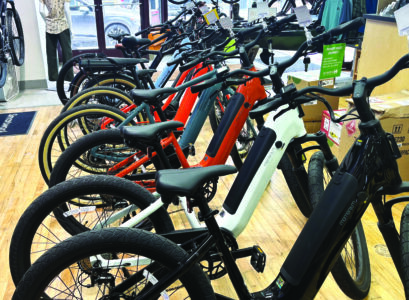
In a small area such as the Keweenaw, innovation can sneak up in an instant. E-bikes have been an example of such technological advancements coming to the Copper Country. E-bikes are classified in three tiers: class one, two and three. The higher in class consumer buys, the faster the e-bike goes. They can reach speeds up to 28 mph for a class three e-bike.
According to a March Consumer Reports article, direct to consumer (DTC) e-bikes are cheaper than store-bought, but require consumer assembly of certain parts such as handlebars.
Cross Country Sports Owner, Rick Oikarinen, sells e-bikes out of his store in Calumet. He urges people not to buy cheap e-bikes and to store batteries safely. “I haven’t heard of any problems with the big companies that do their homework and pass U.S. standards,” he said. “If somebody wants to bring an e-bike in here, in our store to be worked on, if it’s off-brand, that battery is not allowed to be in this store overnight.”
Oikarinen said he does not do anything special with his e-bike battery, but he makes sure it is not in the way of doors or exits in his home.
According to the CR article, improper charging equipment or an unsafe battery could spark danger for consumers.
"Although e-bike batteries and their electronics are generally very safe, a faulty battery or charging equipment can cause a major fire that could lead to injury or death," CR writer, Benjamin Preston, said. "Lithium-ion battery fires associated with e-bikes and e-scooters are a growing problem, mostly due to the availability of batteries and related parts that aren't properly tested."
In 2024, the New York City Fire Department released a guide for residents and e-bike enthusiasts so they can safely store and charge their rides.
"You should never store or charge a battery in a location that interferes with anyone's ability to exit their unit or the building," one tip says. "Extension cords are not permitted. Any charging location must enable chargers to plug directly into outlets"
Those guidelines are specific to NYC, but can apply to U.P. residents as well.
Neither the City of Houghton, nor the City of Hancock have any specific ordinance or regulation on e-bikes -- whether it involves storage or road safety. This may not be an oversight. Through Michigan state law, e-bikes are regulated like any other bicycle.
"Electric bicycles are regulated like bicycles. The same rules of the road apply to both electric bicycles and human-powered bicycles," a PeopleForBikes law handout says. "Electric bicycles are not subject to the registration, licensing, or insurance requirements that apply to motor vehicles."
The handout references Michigan compiled laws: 257.32b, 257.216, 257.312a, 257.801e and 750.419.
As with every bicycle, e-bike riders assume a risk when using roads, sidewalks and trails. According to Detroit-based law firm, Femminineo Law, basic tips for riders and pedestrians include: always wearing a helmet, following traffic laws when riding in the road, yielding to oncoming pedestrians, regularly servicing your e-bike and wearing reflective clothing at night.
"There is no minimum age requirement, license requirement, or gear requirement for class 1 or 2 e-bikes," Femminineo law's webpage says. "Class 3 e-bikes present some very minimal legal requirements."