
Supporting composting
Keweenaw Board endorses awareness week
Trending
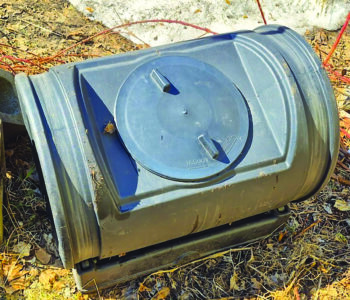
KEWEENAW COUNTY - At its regular April meeting, the Keweenaw County Board unanimously adopted a resolution in support of composting in recognition of upcoming International Compost Awareness Week.
"The Keweenaw County Board of Commissioners hereby declares the week of May 3, 2026 through May 9, 2026 as International Compost Awareness Week," the resolution sttes, "in recognition of the efforts of Keweenaw County households, businesses, farmers, landscapers, extension agents, recyclers, public workers, composters, watershed health advocates, and plant growers everywhere who contribute to the positive impacts of composting."
A similar resolution is on the agenda for next regular meeting of the Houghton County Board on May 12.
International Compost Awareness Week (ICAW) is the largest and most comprehensive education initiative of the compost industry. It is celebrated nationwide and in other countries each year during the first full week of May. The goal of ICAW is to work together to raise public awareness on why we all should be composting our organics recycling and using compost, according to Atlas Organics, a North Carolina-based commercial environmental services company specializing in large-scale organic waste recycling and compost production, says.
Locally, however, very few people are composting, says Brendon Presnell, materials management planning coordinator at the Western Upper Peninsula Planning and Development Region (WUPPDR).
"As far as the region is concerned, 30% of what we send to the landfill could be going to compost and remediating the land after having the topsoil stripped off with land sales over the years," Presnell said.
The Department of Environment, Great Lakes, and Energy (EGLE) regulates materials management throughout Michigan including recycling programs and proper hazardous waste disposal. This also includes composting.
Presnell said even among recyclers, the interest in composting is lower than people would expect.
"You might think that composting and recycling tend to be - if you're willing to go through the effort of recycling, you're willing to go through the effort of composting."
Last year, the Western Upper Peninsula Planning and Development Region (WUPPDR) conducted a public survey to get, to determine the level of interest in a potential local community composting program. It also asked if people are already composting at home.
While the survey was extensively publicized throughout Houghton County, only 75 people responded. The data showed that the most of the 75 respondents were from the Copper Country with most from Houghton and Hancock (31% and 27%), the next most from Calumet (8%), and the remaining from smaller communities in the Western UP most of which were focused in the Keweenaw Peninsula. There was one response from L'Anse and one from Ironwood.
The survey found that just two-thirds of the respondents compost at home. Presnell said a lot of that may do with a lack of education in the region.
"In a lot of ways, the education about composting is pretty low in our region unfortunately," he said. "Partially because our programs have been, really lackluster, to say the least. But even still, composting education is lacking in the area."
Composting is a natural extension of recycling. EGLE's work helps create effective community materials management programs that strive to divert waste from the landfill and achieve carbon neutrality.
"Composting is an important step in getting us there, or rather, it's follow-through on after we've gotten there," Presnell said. "How do we get rid of that waste more efficiently and more responsibly?
For people who are willing to learn the ways of composting effectively, it's kind of a no-brainer."
Presnell said he believes many people think composting is more difficult than it actually is.
"I mean, it's no harder than remembering you grocery bags before you go to the grocery store," he said.