
From high to low
Wildfire risks vary
Trending
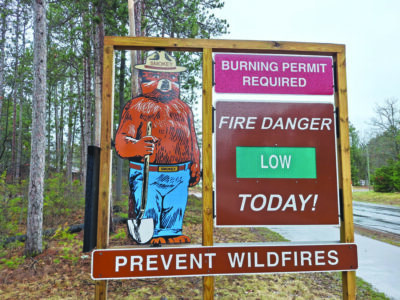
HOUGHTON COUNTY -- The Michigan Department of Natural Resources issued fire risk warnings for most of the Copper Country Friday, due to "high" to "very high" danger assessments. Risk persisted throughout the weekend, but no major wildfire incidents spiraled out of control, a DNR official said.
According to the Great Lakes Fire and Fuels map, which tracks fire risk for Michigan and most of Wisconsin, Houghton County jumped from "medium" to "very high" risk on May 14 and stayed throughout the weekend until Monday. Keweenaw County remained below "high" risk over the weekend.
DNR Upper Peninsula Resource Protection Manager, Celeste Chingwa, said the DNR assesses fire risk through various means before issuing notices.
"The weather stations take information on temperature, relative humidity, wind speeds," she said. "We start measuring how much fuel moisture there is in fine fuels and that relates back to heavier fuels as the year goes on."
Chingwa said the DNR sees the risk jump up this time of year because of fields drying up quickly, which creates an abundance of fine fuels. The USDA Forest Service classifies fine fuels as "grass, leaves, draped pine needles, fern, tree moss and some kinds of slash, that ignite readily and are consumed rapidly when dry."
According to Chingwa, there were only a few wildfires across the Western U.P. last weekend -- most of them man-made.
"Our greater concerns when we're looking at those agitate readings is the concern of what type of fuels they're burning in," she said. "So, this time of year it's those fine fuels, grasses, leaf litter -- stuff like that."
Chingwa said the DNR is also watching dense pine tree areas in Baraga, Ontonagon and Gogebic counties.
"Those are areas in which we have pine standing and those fine fuels dry out very fast and then they're compounded with the drying pine that cause concern for people," she said. "That's why we're always so concerned in the spring because those pines are susceptible to burn more readily."
Chingwa said the DNR is advising Yoopers to contact their local fire departments or the DNR if they have questions about debris burning. Spring tree flushing, as well as lawns growing, creates susceptible fuel environments for fires.
Fire risk assessment jumping to “high” or “very high” risk levels at this time of year is common, Chingwa said. However, some parts of the northern Keweenaw Peninsula still have snow on the ground, so the peak of wildfire season has not arrived yet.
What the DNR is concerned about at this time of year is the temperature change causing risk rates rising. Drought codes, which track moisture levels in the soil, following spring are also an issue, Chingwa said.
"We're always most concerned in spring of the year and then if things dry out substantially and you see drought codes starting to rise... we start having more fires again," she said. "And so, this time of the year, [drought codes], basically start out at zero, and they start to build from there."
Chingwa said the DNR website has resources for fire safety and burn permits. It can be found at www.michigan.gov/dnr/education/safety-info/fire.