Night driving risks associated with aging
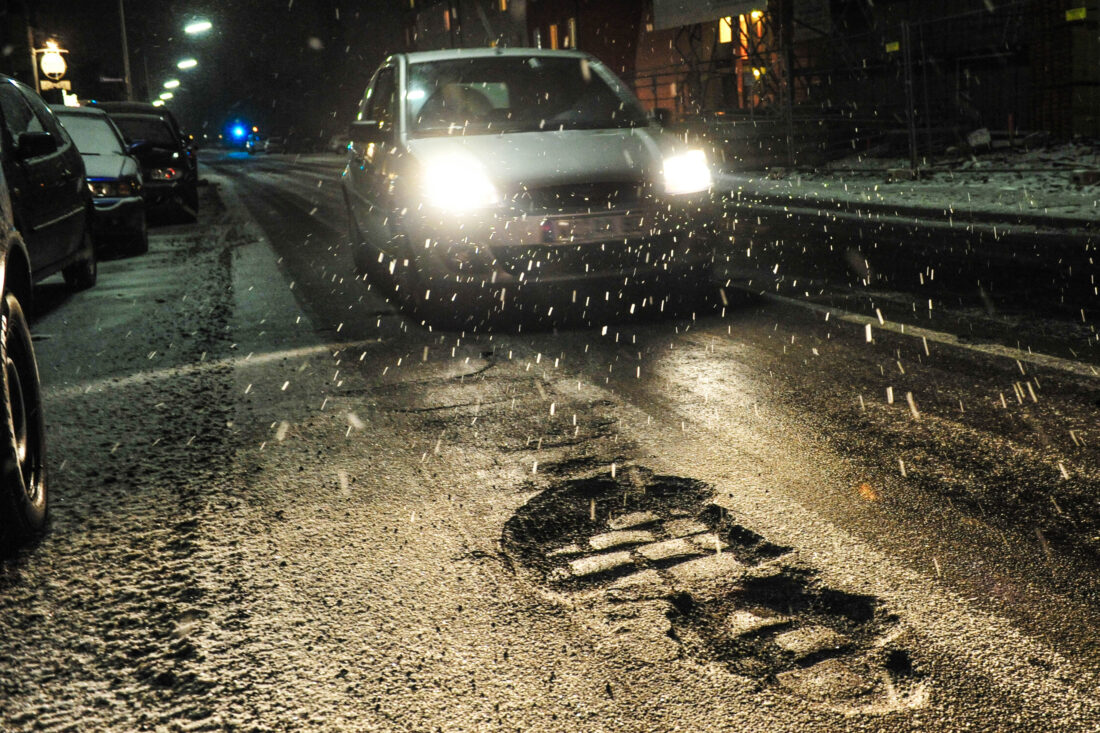
MetroCreative photo
HOUGHTON – As adults age, their body experiences a variety of physical and mental capacity changes. One of the most visible body changes involves tissue. This includes facial and neck features, arms, legs, feet, hair and hands.
Many individuals are unaware that behind their eye lens, there are three tissue layers.
A recent AARP Magazine article on night driving stated, “Humans are born with two types of photoreceptors in their eyes: rods and cones. In the daytime, we utilize cones — the structures that allow us to see color. With the onset of night, however, we shift to a mix of rods and cones; in very, very low light, we rely entirely on rods — which is why, in the darkness, everything appears black and white.”
The article continues, “When you age you start to lose rod photoreceptors before you lose cone photoreceptors,” says Cynthia Owsley, the chair of ophthalmology at the University of Alabama at Birmingham. She adds, “Your vision in daylight may be just fine, our night vision becomes less acute.”
In most instances, mature adult vision loss is gradual. In addition, older adults can experience hearing loss and slower reaction time or rapid situation reasoning.
According to LeAnn Burns, O.D., a northern Michigan optometrist, the most prevalent vision challenge for mature adults is cataracts. She added, “This is when the eye’s lens becomes clouded, and the light flow becomes much lower causing vision to be more challenging – especially at night.”
Burns commented that mature adults can also experience dry or wet macular degeneration which affects the central vision. Addressed early on, select treatments are available to slow wet macular degeneration.
The most recent U.S. Census Bureau statistics reveal out of the nation’s 333 million residents, slightly over 17% are age 65 and above. For the Keweenaw Peninsula’s four county region the age 65-plus percentages are:
• Baraga at 22.8%
• Houghton at 18.2%
• Keweenaw at 36%
• Ontonagon at 37.1%.
The Keweenaw region offers mature adults nighttime vision challenges which can occur during vehicle driving, as well as with boating, snowmobiling and off-the-road all-terrain vehicles.
Burns stated nighttime vision can be even more exasperating with snow and rain glares. These could involve unexpected roadway directional changes or a possible roadway blockage making it even more challenging with low vision.
The Centers for Disease Control and Prevention, other older adult driving research authorities and Burns offer the following guidelines:
• Follow a regular activity program to increase your strength and flexibility.
• Ask your doctor or pharmacist to review your medicines–both prescription and over-the counter.
• Avoid alcohol consumption or marijuana use before driving.
• Have your eyes checked by an eye doctor (optometrist or ophthalmologist) at least once a year. Wear glasses and corrective lenses as required.
• Plan your route before you drive and when it is safest to drive avoiding heavy traffic or bad weather.
• Keep all your vehicle’s windows clean and clear, as well as headlamps.
• Find the safest route with well-lit streets, intersections with left-turn signals, and easy parking.
• Leave a significant following distance between your car and the car in front of you.
• Avoid distractions in your car, such as listening to a loud radio, talking, or texting on your phone, and eating.
• With today’s high-tech dashboards, adjust the illumination to which best suits you.
• Consider potential alternatives to driving, such as riding with a friend, using ride share services, or taking public transit.
Safe driving.
Jeffrey D. Brasie is a retired health care CEO. He frequently writes historic feature stories and op-eds for various Michigan newspapers. As a Vietnam-era veteran, he served in the U.S. Navy and U.S. Naval Reserve. He served on the public affairs staff of the secretary of the Navy. He grew up near the tip of the mitt and resides in suburban Detroit.
Front Page
It only takes a spark
When night falls
Expanding role

Notable books
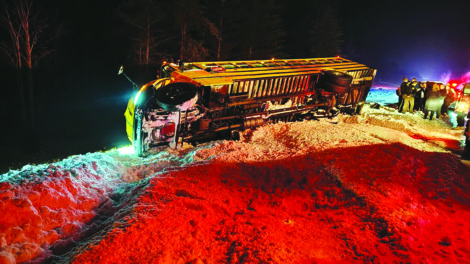
Ice causes accident, road closure
IRON MOUNTAIN — At about the same time a bus carrying girls basketball players slid off the road in Marquette ...