
A Fuzzy Threat
Battling Balsam Woolly Adelgid
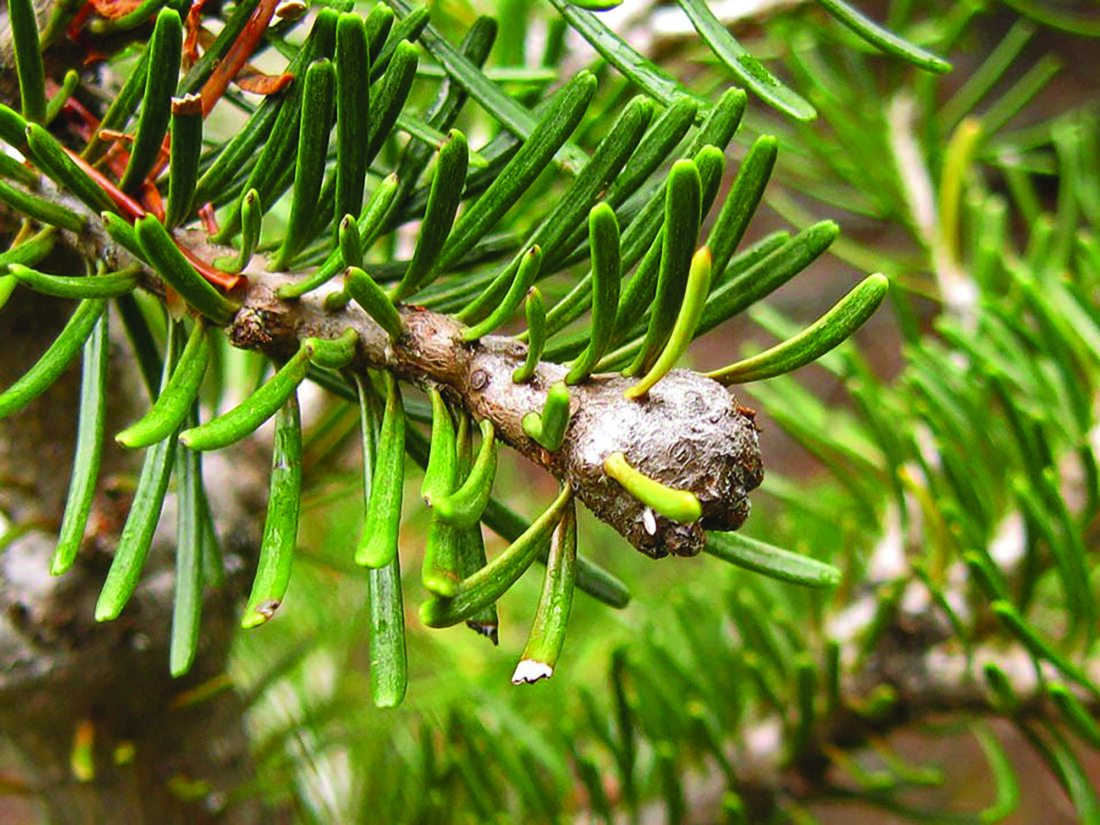
US Forest Service Branch gouting, or swelling, is a prominent symptom of balsam woolly adelgid infestation.
HOUGHTON — The excitement of snow and the holidays is upon us. Enjoy the holidays while protecting our beloved forests from balsam woolly adelgid (BWA; Adelges piceae). The BWA is an invasive insect that was discovered in Missaukee and Clare Counties, MI, in the northern lower peninsula in 2023 and 2024, and several other counties in southern Michigan before that. The insects can be spread via holiday decor such as Christmas trees and wreaths bought from nonlocal sources. Easy prevention steps now can have significant impacts on the well-being of next year’s Christmas tree harvests and forest ecosystems.
Why is this important?
As sap-feeding insects, BWAs weaken trees, cause twig gout (swelling/abnormal growths), kill branches, and eventually the whole tree. The trees targeted by these insects are true firs such as balsam, white, and frasier fir (for example, Superior Tree Farm Christmas trees). There are around 1.9 billion balsam firs within Michigan’s forests, and each year, 13.5 million of those are produced for use as Christmas trees or decor. We love their look, smell, and ability to retain their needles after harvest; however, we aren’t the only species that enjoy firs.
Balsam firs attract ungulates (hoofed mammals) such as white-tailed deer and moose because, in comparison to other tree stands, snow remains relatively shallow beneath their canopies. They also provide places for wildlife such as martens, hares, songbirds, and even deer to hide from predators. Beavers have also been known to build dams from Balsam fir wood. From a nutritional standpoint, balsam fir is a major food source for deer during the winter. Additionally, buds, tips, and needles make up a minor diet source for spruce grouse and ruffed grouse, with mice and voles feeding on the seed and phloem. Black bears strip the bark and lick the then exposed surfaces below. Balsam firs are a vital component to your local ecosystems in ways that you might not even realize. If the plight of BWA continues, we may lose this species that is not just a safe haven and food source for our local wildlife but represents a central role in American culture.
How to Identify BWA:
The BWA is a flightless insect introduced from central Europe. The insect itself is very small; it has an oval shape and a dark purple-black color. Because of its miniscule size, it is important to look for signs of its habitation rather than the insect directly.
Key identifiers
• One-two millimeter wooly-like (actually waxy in texture) tufts that can be found on the lower trunk and large branches occasionally during spring and summer
• Gouting: swelling and abnormal growth on branches and twigs
• Flagging: branches that have turned a brick-red
How is BWA spread?
Originally from Central Europe, BWA was first introduced to the US in the 1900’s from nursery stock and can be spread through a variety of means by people and nature. While BWA can be carried by wildlife such as birds or in the wind, people moving BWA is the bigger concern. The insects can travel with vehicles, equipment, clothing, firewood, infested nursery stock, other wood products, and Christmas trees.
What can you do to protect firs in the Keweenaw?
Only buy nursery stock if it has been inspected and derived from a reputable source (ask your nursery about inspections to let them know it is important); inspect it yourself as well, looking for the waxy, white spots
Do not move firewood or buy wreaths or trees from outside our area
When traveling or hiking, observe what species are around. When leaving sites, clean clothing, vehicles, and equipment before moving to a new area.
Lookout for tell tale signs of infestation to eliminate accidental spread
Report infested trees; for help on how to do this and additional resources, check out these websites:
https://www.michigan.gov/invasives/id-report/insects/balsam-woolly-adelgid
https://www.dontmovefirewood.org/. For more info specifically pertaining to invasive species in the Keweenaw, check out our KISMA website: www.mtu.edu/kisma
With Balsam and related firs providing important ecological roles as well as serving as our beloved Christmas trees, we cannot afford to let BWA kill them off. By remaining careful, we have an opportunity to prevent the further spread of this fuzzy-looking and damaging invader!
Outdoors
A Fuzzy Threat

Outdoors North: John Pepin
Eat Safe Fish
In brief
AHMEEK — The Calumet Keweenaw Sportsmen's Club will hold its December membership meeting and annual raffle ...
Storms keep snowmobile trails impassable in western UP