
Counting turkeys
Survey open through August
Trending
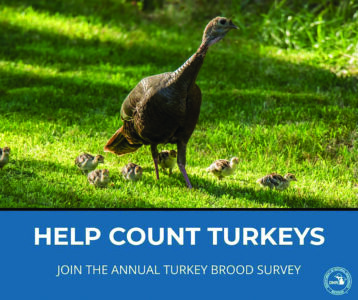
LANSING -- Maintaining a health turkey population requires continued monitoring, the Michigan Department of Natural Resources says. To accomplish this, the DNR is asking the public to participate in its wild turkey brood survey. The annual survey began July 1 and ends Aug.31
Adam Bump, upland game bird specialist with the DNR Wildlife Division, said the survey allows the DNR to track trends on turkey population over time.
"This may allow us to better understand turkey population trends over the long-term by using an index of turkey poults (young birds) produced per hen," he said. "In some states this survey has been found to correlate to tom harvest in the second year after a brood survey year (when a young turkey would become a tom)."
This is the fourth year of the brood survey, Bump said, and the DNR is encouraged by the community-driven support for conservation of this native species. Since the survey launched in 2023, Michigan residents have submitted more than 17,000 sightings, documenting over 36,200 hens, 95,300 poults and 15,500 male turkeys.
Wild turkeys are native to Michigan, but due to unregulated commercial hunting and massive logging that cleared out their forest habitats, the turkey population was wiped out in Michigan by 1900.
The DNR reintroduced the birds in the 1950s. Since then, the population has seen significant increases, except in Keweenaw County. In the DNR's Spring Turkey Hunter Survey Report, Keweenaw County was alone in recording a 0% hunter success rate, due to having fewer than 50 registered turkey hunters and no registered harvests. A major factor is the county's severe winters and deep snow.
Still, the DNR says maintaining healthy turkey populations requires ongoing monitoring, which is why the wild turkey brood survey is so important.
Bump said summer is the best time of year to observe these turkey broods, and every observation helps provide a better understanding of young turkey survival.
"(The survey) is used to help with season predictions for hunters," said Bump. "Michigan has just begun to get enough years of the survey to start to examine results to see how these trends may aid in turkey management and hunter information in the future."