Laurium native to be inducted into Michigan Women’s Hall of Fame
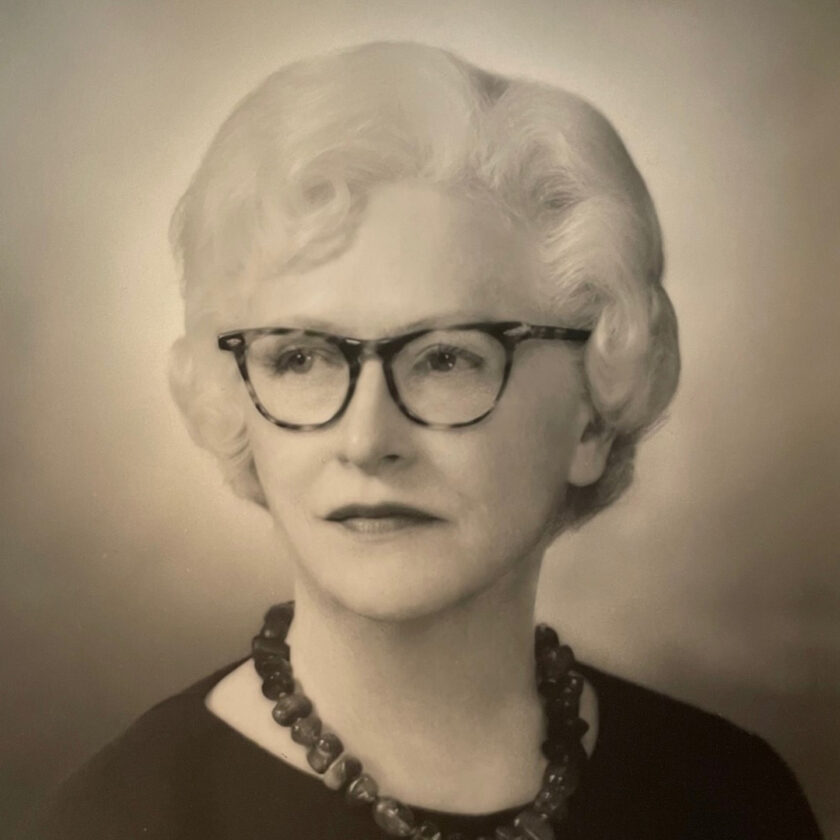
Mary Locke Petermann in Michigan Women Forward
-
- Mary Locke Petermann in Michigan Women Forward
-
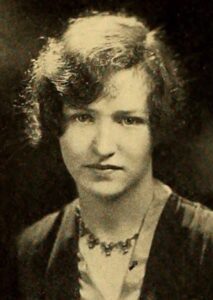
- Mary Locke Petermann, shown in the 1929 Smith College yearbook
On July 2, 1903, Albert and Anna M. Grierson were married. The marriage produced two children, Albert Edward, Jr., born on Oct. 3, 1905, and Mary Locke Petermann, born in Laurium on Feb. 26, 1908.
Mary graduated from Calumet High School. Mary’s parents then sent her to the Massachusetts preparatory school. She had shown a deep interest – as well as an aptitude for – science, but her family tried to dissuade her from entering the field as a profession. She was not dissuaded.
Rather, she went on to study chemistry at Smith College, graduating with honors in 1929. Mary entered the scientific world at a time when the role of women was expanding in that field, although in a limited capacity. Mary, however, would break many boundaries for the women would come after her.
After graduating from Smith, Mary was employed at Yale University as a research technician, until 1931, when she went to the Boston Psychopathic Hospital, where she researched acid-based imbalance in psychiatric patients for four years, before she enrolled at the University of Wisconsin in 1936, studying physiological chemistry. She received her Ph.D. just three years later for her thesis work on the role of adrenal cortex in ion regulation.
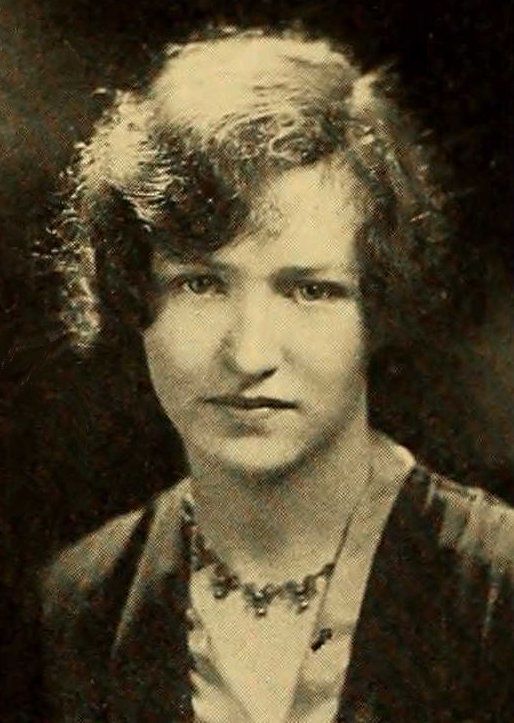
Mary Locke Petermann, shown in the 1929 Smith College yearbook
Mary then accepted a position on the staff of the University’s Department of Physical Chemistry, becoming the first female chemist there. Between 1939 and 1945, she served at the university
From 1939 to 1945, she remained at the university as a postdoctoral fellow, working with Alwin Pappenheimer to research the physical chemistry of proteins. It was while conducting that research that she discovered ribosomes, first called Petermann’s Particles in her honor. She was the first person to isolate and characterize animal ribosomes, which are the site of protein synthesis in cells. She also successfully isolated several types of ribosomes and recorded their properties.
While at Wisconsin, according to Elizabeth Oakes’ Encyclopedia of World Scientists: Facts on File Science Library, Science Encyclopedia, she launched a study on antibodies. Her research on this topic would lay the groundwork for Robert Porter’s Nobel Prize-winning findings concerning the structure of immunoglobulins.
In 1945, Mary left the University of Wisconsin for a position as a research chemist at Memorial Hospital in New York City. There, she examined the role plasma proteins play in the spread of cancer.
In 1946, she was named the Finney-Howell Foundation fellow at the newly created Sloan-Kettering Institute, where she was charged with exploring the role of nucleoproteins in cancer. She was promoted to associate member of the institute in 1960 and became the first female full member three years later.
In addition to fulfilling her obligations to Sloan-Kettering, she concurrently taught biochemistry at the Sloan-Kettering Division of the Graduate School of Medicine at Cornell University, from where her father had graduated. In 1966, she became the first woman to be appointed a full professor at Cornell.
Mary retired from Cornell in 1973. A powerful advocate for women in science, when she retired, she founded the Memorial Sloan-Kettering Cancer Center Association for Professional Women the following year. She also served as the association’s first president.
In her career, Mary authored more than 100 scientific papers. She provided insight into the significance of proteins and nucleoproteins. Her pioneering work on the nature of cell ribosome was seminal and has been widely recognized. In 1963, she received the Sloan Award, and she also won the 1966 Garvan Medal of the American Chemical Society. In addition, she was honored with the Distinguished Service Award from the American Academy of Achievement.
Among Mary Locke Petermann’s achievements and accomplishments, she was:
• The first female chemist on the staff of University of Wisconsin’s Physical Chemistry Department.
• The first female full member at the Soan-Kettering Institute.
• The first woman to be appointed a full professor at Cornell
Among her honors and awards are:
• Sloan Award for cancer research, 1963.
• Garvan Medal from the American Chemical Society, 1966.
• Honorary doctorate from Smith College.
• Distinguished Service Award, American Academy of Achievement.
• Rockefeller Foundation fellowship.
• Elected fellow of the New York Academy of Sciences.
In 1976, the AWIS Educational Foundation named a graduate scholarship in her name.
The list of Mary Locke Petermann’s awards did not end there.
On Wed. Nov. 9, Laurium native Mary Locke Petermann will be one of five outstanding women inducted into the Michigan Women’s Hall of Fame by the Michigan Women Forward. She is being inducted for her outstanding contributions to chemistry, including the discovery of ribosomes.
Mary passed away from intestinal cancer on Dec. 13, 1975, at the age of 67. She never married, but she did return to Calumet. She is buried in the Petermann family plot in the Lake View Cemetery.
Front Page
UTV death in Marinette Co.
STEPHENSON — A utility task vehicle (UTV) crash on Marinette County's Caldron Falls Road near Fawn Lane Saturday ...
On ICE!
Sign of spring

Alcohol Awareness Month

Nessel secures court ruling against Trump