A local connection
Tech professor emerita at heart of White House lawsuit

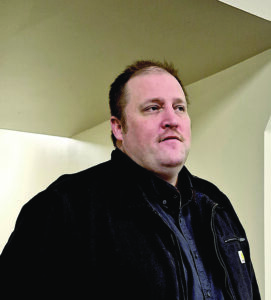
Photo courtesy of VAF/Gretchen Pineo Michigan Technological University Professor Emerita, Alison (Kim) Hoagland, who along with the National Trust for Historic Preservation, brought the lawsuit against the White House Ballroom project which is currently in appeals court.
WASHINGTON, DC — A recent United States District Court decision to halt the construction of the new White House ballroom is having implications far beyond Washington — in fact there’s a direct connection to the Houghton area.
Michigan Technological University Professor Emerita, Alison (Kim) Hoagland, is at the center of a lawsuit filed on behalf of the National Trust for Historic Preservation, where Hoqtlqne sits on the Board of Trustees.
According to a feature National Public Radio, Hoagland sued on behalf of not only the NTHP, but also as a resident of D.C. herself.
The lawsuit describes the White House as a symbol of the American people. It claims the defendants, President Trump among others in his administration, recklessly tore down the East Wing of the building without any public or congressional input.
“No president is legally allowed to tear down portions of the White House without any review whatsoever,” page two of the lawsuit states. “No president is legally allowed to construct a ballroom on public property without giving the public the opportunity to weigh in.”
Congress has the overarching authority for appropriating funds in government. This also extends to construction on public land, including the White House.
The lawsuit cites several codes and statues when the suit was submitted, but according to the NPR segment, Hoagland needed personal grounds to sue on behalf of the NTHP. She decided to file as a resident of Washington, D.C. on the basis of her morning commute being physically and visually interrupted.
“I’m appalled because it’s harm to everybody. It’s not just me,” Hoagland said on NPR. “This is the American people’s house, and we should be very concerned about what is happening to it.”
According to Steve Inskeep of NPR, the judge in the lawsuit said that Hoagland “adequately described” the ways in which the construction of the White House Ballroom would negatively affect her and others’ life in D.C.
Hoagland taught a variety of social science courses at Michigan Tech before retiring in 2009, including historic preservation. Her expertise in historical architecture was what NTHP needed in order to formulate the lawsuit.
Hoagland’s experience studying architecture in the Copper Country landed her a role on the Keweenaw National Historical Park Advisory Commission as its Commission Chair.
According to Michigan Tech’s industrial archaeology webpage, she was co-editor of two volumes of “Perspectives in Vernacular Architecture.” Hoagland is listed as the current governance committee chair of the Vernacular Architecture Forum.
“I think that our architectural, pretty much all buildings, but particularly our noted landmarks have a lot to teach us,” Hoagland said. “And we should be very careful when we change them irrevocably.”
The White House is currently fighting the lawsuit and subsequent decision in court, opting to immediately send the decision to appeals court. The Trump Administration maintains the construction is of a national security concern, not a lapse in oversight.
According to President Trump, the funding was largely through private donors and was not subject to any approval or oversight by Congress.
The NTHP has until this afternoon to respond to the appeal.
Hoagland said her experiences in the Keweenaw and her long-standing history of preserving architecture has been important to her as a historian.
“Wherever you are, people care deeply about their environment and they care about their built environment,” she said. “They don’t have to be huge landmarks or anything, but an understanding of where we’ve come from — where the Keweenaw has come from. I think that’s really important.”
Front Page

A local connection
UTV death in Marinette Co.
STEPHENSON — A utility task vehicle (UTV) crash on Marinette County's Caldron Falls Road near Fawn Lane Saturday ...

Meth Lab in Houghton County
On ICE!

Sign of spring