
Tiny insect … big problem
Tick season underway
Trending
HANCOCK -- Tick season has returned to the Keweenaw. Experts in the Copper Country and beyond have urged caution when traversing grassy, brushy or woody areas. They also offer some tips to deal with ticks to prevent Lyme disease and Anaplasmosis.
Western Upper Peninsula Health Director, Dr. Robert Van Howe, said ticks, if left unchecked, can transmit disease through contact in different locations outside.
"If you're walking through an area that's just grass, long grass, they can certainly attach to you at that point," he said. "Once they're attached, then they bite. They grab on and it takes about a couple of days before they can transmit illness."
Van Howe said how long tick season lasts is dependent on the weather, usually from the time it hits 40 degrees until it consistently dips under. Diseases like Lyme disease and Anaplasmosis can be found in the insect’s saliva.
According to the Center for Disease Control website, Lyme disease can result in rashes, fever, chills, headaches, fatigue, and can eventually lead to brain inflammation, muscle and joint pain, facial palsy and heart problems.
Anaplasmosis can include early, moderate symptoms like fever, chills, severe headaches, muscle aches, nausea, vomiting, diarrhea and loss of appetite. As the disease progresses, illness gets worse and includes respiratory failure, bleeding problems, organ failure and death.
Van Howe said the two tick-borne illness can be comorbid, meaning they can exist simultaneously in an individual. "We find that about 15 percent of people who have Lyme [disease] also have Anaplasmosis," he said. "And they're both transmitted by the same type of tick."
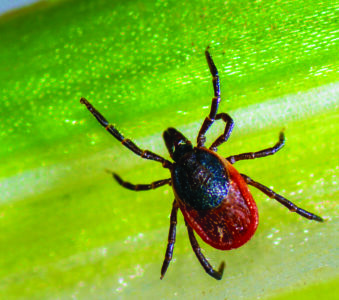
According to the CDC, both diseases are spread by the Blacklegged tick.
Van Howe and other medical associations such as the Michigan Department of Health and Human Services, recommend wearing certain clothing while traversing nature areas.
"We recommend people wear long sleeves or long pants, if they're going to be in those areas," he said. "It makes it less likely for [ticks] to attach."
Van Howe and MDHHS also recommend bug spray or some kind of repellant on clothes. He said checking for ticks daily, especially for children, is an essential part of the prevention of tick-borne illnesses.
"We also recommend that people do daily tick checks, especially with their kids, because the kids don't even know that they're on there," he said. "And the nymphs can be really tiny, only [a] millimeter or two in size, especially early in the season."
According to a MDHHS pamphlet regarding tick information and disease prevention, key places to check include: the scalp, ears, underarms, belly button, waist, back, behind knees, pelvic area and in between legs.
Data from the MDHHS shows Lyme disease risk for this year in Houghton, Baraga, and Ontonagon counties is present, with at least two confirmed local exposures and/or Blacklegged ticks with Lyme bacteria.
Keweenaw County is at potential risk due to it being adjacent to counties with confirmed data, MDHHS says.
Van Howe said Lyme disease has been moving from neighboring Wisconsin to the U.P. and cases have been increasing each year. He added cases may be underreported due to visible rashes, a key part of the diagnosis, not showing up on patients.
"One of the other things we don't always have, even though [Lyme] is a reportable disease, a lot of them get diagnosed based on symptoms and the rash," he said. "So, they don't get reported to the health department. So, there are probably more cases out there than we actually hear about."