
Uniting UP counties
Local officials hear about Regional Community Corrections
Trending
HOUGHTON - Officials from Houghton, Keweenaw and Baraga counties gathered recently for a presentation on the topic of joining the Marquette Regional Community Corrections program (MRCC).
Faith Morrison, advocate for addressing Houghton County Jail issues, said in a press release that stakeholders from county law enforcement, the courts, and related entities were invited to the meeting to learn about opportunities for Houghton, Baraga, and Keweenaw counties to collaborate with the regional program.
Trevor Kadlec, community corrections director with the MRCC, talked about that entity's desire to unite U.P. counties in a common Community Corrections Program that would provide pretrial services, treatment court operations, jail population management, and access to evidence-based programs for individuals involved in the justice system.
Among the programs discussed were Pretrial Risk Assessments provided through the proposed program. The service would allow those awaiting trial to be released safely while being subject to appropriate monitoring, for example: regular drug testing, electronic monitoring through devices, or regular check-ins with the program officers.
According to the MRCC website, this program is a research-based risk assessment that identifies a defendant's likelihood of appearing to court, public safety, and risk of violating bond conditions.
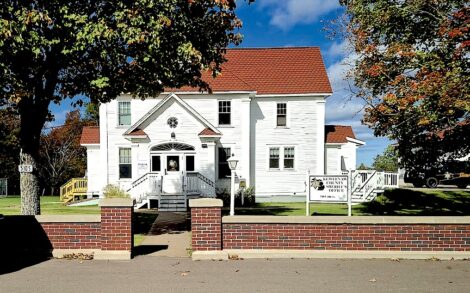
Keweenaw County Sheriff Curt Pennala said the proposal is worth pursuing. "Obviously, this needs to be addressed by the courts but, I believe, also approved by the County Jail," he said. "It benefits the people who are in the program, but there is also a benefit to the Sheriff's Office and the jails, as well."
The MRCC site says the Office of Community Corrections works to reduce the number of people sentenced to prison while promoting public safety through the use of effective, evidence-based programming and services in the community.
"They talked (at the meeting) about low-level offenders and being able to put them on some type of monitoring system," Pennala said. "I think Community Corrections would oversee that, so there are a lot of benefits to the county, and to the jail side."
Another MRCC program is Moral Reconation Therapy (MRT). This is a nationally recognized evidence based practice that has been proven to reduce recidivism. This cognitive behavioral approach positively addresses an offender’s ego, social, moral and behavioral growth.
There is also an Opiate-Methamphetamine Specific Program, a 150-day treatment facility (TRI-CAP) that includes 16 groups per week for 21 weeks. Each treatment plan is person-centered, tailored to each offender’s learning level, motivation level and some are gender specific.
Pennala said based on his current understanding, these programs would benefit those involved as well as the counties.
"Oftentimes, county jails end up functioning as a makeshift detox center, mental health holding facility, or some type of crisis stabilization center, which they're not meant to be," said Pennala, "so this would really benefit us in that way, as well getting people the proper treatment they need, whether that's a behavioral issue, or some type of substance abuse issue, what we all want is for people to get the help they need and try to prevent repeated incarcaration."
Kadlec said the proposed services would be provided to the counties at no cost to them through their Michigan Department of Corrections (MDOC) grant funding. The only county resource commitment required is a member of the Board of Commissioners from each county would need to be appointed to the regional board. The regional board meets in-person, six times annually, in Marquette.