
Smoke from a distant fire
Fires in Canada, Minnesota to blame
Trending
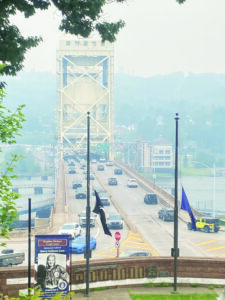
HOUGHTON -- It’s like 2025 all over again. Residents of the Upper Peninsula, indeed throughout Michigan, woke to smoke Wednesday. Just like it was during a good portion of the Summer of 2025, smoke from wildfires in Canada and Minnesota have begun to move over the Great Lake State.
According to a Tuesday media release from the Michigan Department of environment, Great Lakes and Energy (EGLE), meteorologists at EGLE have issued a statewide air quality alert for “elevated levels of fine particulate in the air.” The alert, which took effect at Midnight Tuesday has the potential to be a multi-day event from smoke caused by ongoing wildfires in Canada.
According to EGLE, conditions may be unhealthy for sensitive groups and there is a possibility that levels could reach the unhealthy range which could affect otherwise healthy individuals. EGLE's meteorologists continue to track wildfires, assess conditions and will issue additional alerts if necessary.
The Michigan Department of Health and Human Services (MDHHS) urges residents to monitor air quality conditions in their area and adjust their level of physical activity and take protective actions according to the guidance at the Your Health and Wildfire Smoke webpage .
"We want Michigan families to know how to best take precautions to protect their health and safety during air quality events," said Dr. Natasha Bagdasarian, chief medical executive. "Wildfire smoke is expected to affect air quality this week, starting in northern Michigan and the Upper Peninsula. We are urging Michiganders to check the Air Quality Index regularly to decide if they should be participating in outdoor activities and using the website to help determine what actions they should take to keep themselves and their families safe."
Because the smoke has just arrived in Michigan, impacts and harmful effects haven’t really been reported … yet. John Codere, Supt. of McLain and Twin Lakes state parks said while rangers have fielded question about the smoke, there doesn’t seem to be any serious issues as of Wednesday morning. “So far we haven’t seen where it (smoke) has had an impact on our campers,” Codere said. “But it is early and we haven’t had a lot of interaction.”
According to media reports, the hazy and smoky conditions are coming from a large cluster of active wildfires burning in Ontario, Canada, and far northern Minnesota. Northerly winds and upper-level jet stream patterns are actively funneling these dense smoke plumes sweeping south and southeast across Lake Superior and the Upper Peninsula and into the rest of the region.
Josef Stephens, public information officer with EGLE said the air quality alert issued for Wednesday, remains in effect through today. “For Thursday, expect “Very Unhealthy” in the Upper Peninsula with “Unhealthy” issued for the rest of the state.” Stephens added there is a possibility some hourly readings could reach Hazardous levels today.
Looking ahead, Stephens said a statewide Air Quality Alert remains in place, along with heat advisories. “Canadian wildfires, north of the Minnesota arrowhead continue to burn, out of control, and are spreading.” He said a review of Wednesday morning show impacts in the Upper Peninsula and Upper Lower ranging from up to “Very Unhealthy.” Stephens said conditions will persist and slowly migrate southwards towards the Michigan/Indiana border throughout today.
MDHHS also recommends seeking shelter elsewhere if you do not have an air conditioner and it is too warm to stay inside with the windows closed. Call or text 211 or contact your local health department to find out if there is a shelter or cooling center nearby. Or consider spending time in an air-conditioned public place such as a library, mall, movie theater, etc.
EGLE's Wildfire Smoke page (www.michigan.gov/egle/about/organization/air-quality/air-monitoring/wildfire-smoke) is dedicated to information and resources for the public to use during wildfire smoke events. The webpage houses resources related to how EGLE responds to these events, and details what you can do to learn more, or even to participate in data collection with your own air quality sensor.