Winter clings, but spring is right around the corner
MetroCreative
It was a strange scene to be sure.
I felt as though I had climbed the staircase to the top of the sky, and I was looking into the ever after, the hereafter or the never after.
The sky was white and swirled as it melted into a blank and endless opaque and indeterminate fog. It looked like the place where something becomes forever nothing.
With the ground covered in snow, the effect was enhanced. The temperature hung right at the freezing point and the air was warmer than the ground, or in this case, the frozen surface of a medium-sized inland lake.
A persistent wind gusted into my face, coming to me from across the hard water. I couldn’t see details of anything out there. It was all covered in fog thicker than English pea soup.
I was standing on a bank of snow that had frozen into more ice than snow. I felt as though I was standing at the top of a lofty and crusty peak that had pierced the highest clouds on earth and was now the tallest thing around.
To fall from this height seemed to be merely a matter of tumbling no more than 3 or 4 feet into the fog around me. But I sensed something else might be happening.
It felt like an illusion, like if I fell, I’d keep going straight through the fog into clear and wide-open black, nighttime skies and then straight down for thousands of feet to the cold and jagged rocks below.
There was a tear in the illusion though that revealed to me that this was nothing more than a feeling and not a real event. At the lower left, I could see some darkness in the white, a spot where hints of melted ice at the corner of the lake sat still and irregular in their appearance.
Seeing that, the bubble burst and the reality of this foggy, windy and snowy morning became distinctly real.
Farther to my left now, I could make out the blackened trunks of bare maple and oak trees standing silent, assembled along a hillside that climbed to places higher than where I stood.
In fact, at my place here along the shore of this lake, I was in a depression, at the bottom of a valley rather than the highest peak of anything.
Despite the relatively mild temperature the wind now cut into me making me shiver. I suppose it was a cold reality setting in.
Winter was still here, even though I had closed my eyes tightly and wished very hard over a period of days if not weeks.
The cardinal’s ebullient song, the flocks of chittering goldfinches and even the arrival of the robins couldn’t push this clumsy, pale and doddering slob of a diminished season off the stage or even off to one side.
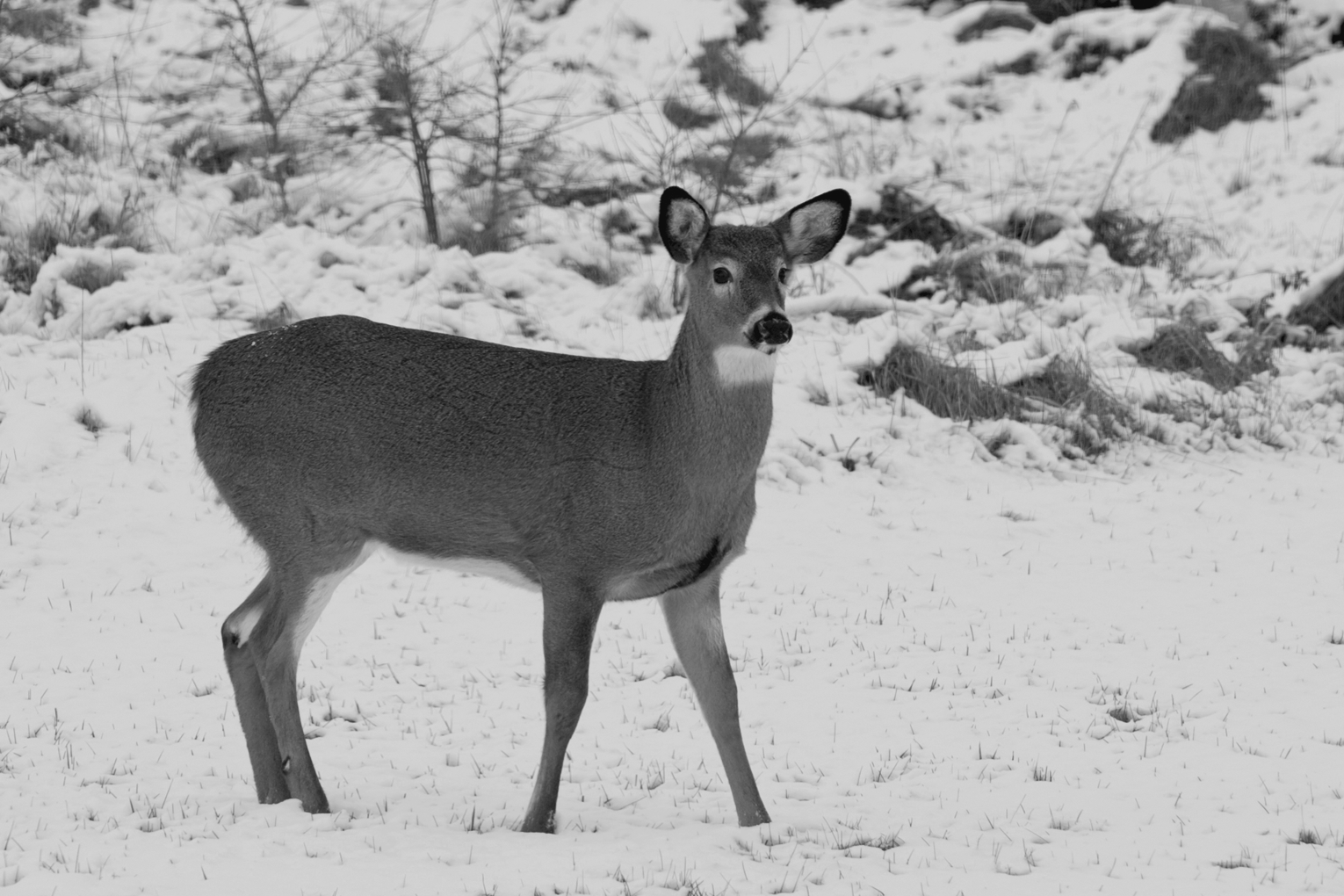
No one was more discouraged than the white-tailed deer that sat amid the trees on the hillside, worn and ragged near the close of their most challenging season. Their energy was all but sapped.
In a group they had bedded down, though some remained standing and staring, while others walked slowly and deliberately through the snow that fell lightly.
Here on this south-facing slope they would seemingly make their stand. It was a survival staring contest. Who would blink first, their ranks of about 40 or the punch-drunk season itself.
At this late hour and date of the wintertime, the deer were run down with the energy they had stored all last summer and fall to bring with them into winter’s wilds now all but gone.
The recent give and take of springtime’s sunshine, warm days and cold nights and some significant snows had made the snow that covered the landscape hard and crusted across its top.
This is a condition favorable to coyotes, wolves, bobcats and emerging bears – things that prey on deer. Meanwhile, the going is tougher for deer trying to make their way through a stark landscape clearly capable of harboring death.
The deer looked more like bighorn sheep or mountain goats. They perched and stood on mighty slabs of cold, wet rocks that had been exposed by the sunshine of warmer days.
The sticks of hemlocks and cedars the deer favor for food at this time of year were getting scarce, especially those resources that had not already been picked over during the past few months.
The fresh snow covered the backs of the deer. The color of their grayish brown coats matched the places where the ground had opened to reveal the dead ravages of last autumn.
Rusted pine needles, browned, tattered and diminished leaves covered the ground amid dead and bent grasses.
Higher up the hillside, the fog obscured views of some of the deer that walked on upward into the clouds. Others were visible, but the fog shrouded them in white, making them appear as ghosts floating back and forth beyond this world and the next.
I didn’t want to disturb them. I didn’t want to make them expend any energy to have to try to move away from me to somewhere just a few feet away where they might feel they were again at a safe distance.
So, I stood where I stood.
I looked away frequently to let the deer know I wasn’t focused on gaining an upper hand on them. I spoke to the nearest of the animals occasionally.
Inside, I sympathized with their condition. I wished I could feed all of them and relieve their struggling to hold on for a few more days or hours.
I knew that even if I did have food, it would do nothing to improve their circumstances. What they needed was the greenery of springtime and eventually, summertime.
Some of these deer sitting here were pregnant with fawns to be born in the weeks ahead. Of course, a lasting and cruel winter would threaten all deer.
And so, the staring contest continued.
One of the smallest deer, one that looked like a yearling born last summer, walked slowly to within a few feet of me. It dipped its head down to reach for some of the dried grasses.
It lifted its head, munching. The sound was loud compared to the silence covering everything else on the scene. Some of that dried grass it was chewing extended from both sides of the animal’s mouth.
This deer seemed determined to overcome these dwindling days of winter. It might have had a bit more energy than most of the other deer, or at least that’s how it looked.
It stood with one ear cupped forward toward me and the other facing behind. The animal reminded me of a Shetland pony or Gumby’s horse friend, Pokey. But this deer wasn’t clay-orange colored and it didn’t talk.
I know because I tried to have a conversation with it.
Not far away, the sound of car tires crunched past on a county road. None of the deer moved. Instead, they seemed to deliberately freeze to make themselves look like part of the scenery.
This tactic appeared as though it might have been one of their last mountable defenses.
I have heard about the horrible results of similar conditions for deer in some desperate seasons past. I recall tales of those who have walked over the top of a ridge to see dozens and dozens of deer perished across the landscape below.
As it is with humans, death is indiscriminate in animals. Nature is sometimes harsh, swift, bold and uncompromising.
We seem to struggle with this more than other creatures. It is said that it is our minds that separate us from the animals. They seem to either accept their lot or don’t understand the circumstances they are up against.
Humans, on the other hand, know the potential for bad things and good things to happen for us, for animals and plants and the earth itself.
Many times, I think I would prefer to not know about our collective circumstances. In these cases, ignorance may truly and indeed be bliss.
But it is all hard to figure really. I think the deer must have an idea of their plight. I think they must feel themselves more tired and desperate.
I’m hoping for springtime now more than ever. Not the calendar kind of springtime that works for Indiana and Iowa and elsewhere. The real kind of green grass at Easter springtime with buds swollen and getting ready for May to pop on the trees.
I want to see April showers to bring May flowers and the summertime sight of newborn fawns following behind their mothers.
Time will tell. I remain cautiously optimistic.
Outdoors North is a weekly column produced by the Michigan Department of Natural Resources on a wide range of topics important to those who enjoy and appreciate Michigan’s world-class natural resources of the Upper Peninsula.