
Weider development project receives grant
$1.2 million from Revitalization and Placement
Trending
HANCOCK -- Governor Gretchen Whitmer announced on Monday several commercial and residential developments are coming to rural areas in the Upper Peninsula, including Hancock.
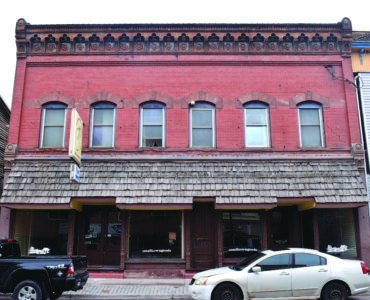
In addition to the $4.5 million Michigan Community Revitalization Direct loan for Hancock’s Skyline Commons development, a $1.2 million Revitalization and Placement (RAP) grant will help with the redevelopment of the Weider building at 115 Quincy St.
According to a press release sent out by the Governor's office, the Weider building will undergo restoration and transform into a mixed-use development, with a microbrewery and four apartments on the upper floor. A façade grant from the Downtown Development Authority in Hancock, totaling $15,000, is also being used for the redevelopment.
Building owner and real waste developer, Jonathon Nagel, said this has been in the works for a while, but with this new funding the project can fully be realized.
"It's been a long process, but I'm stoked to finally be at this point where we can hopefully start construction soon," he said. "Our hope is to start construction in the coming months, in June or July."
Nagel said he expects the construction to take about a year once it starts this summer.
The City of Hancock approved a microbrewery license in 2024 for owner Brendon Presnell of Staghorn Brewing Co. It was the first step in getting it fully operational. Presnell said the financial backing of the Michigan Economic Development Corp. is another key component of the building's redevelopment.
"Without MEDC's support, a project like this just could not happen," he said. "I mean, it was a long road. Without this grant support we would not be moving forward."
This is the second iteration of the RAP grants were introduced in 2023 as RAP 2.0. They are funded through the MEDC's allocation of the state government's departmental budget.
"The [RAP] program provides access to gap financing for place-based infrastructure development, real estate rehabilitation and development, and public space improvements," the MEDC website reads. "Eligible applicants are individuals or entities working to rehabilitate vacant, underutilized, blighted and historic structures and the development of permanent place-based infrastructure associated with traditional downtowns, social-zones, outdoor dining and placed-based public spaces."
Presnell said the process of applying for the grant funding was very competitive. He and Nagel had to demonstrate the need the placemaking funding and how it could be applicable to downtown Hancock.
According to Nagel, when he purchased the Weider building, the apartments were not up to code. He said he plans to build additional units to the upper floor and utilize the space to accommodate four apartments.
"The upstairs had gotten really funky and pretty dysfunctional," he said. "We're actually adding additional [units] and then now they'll all be up to date."
The placemaking aspect of the grant, Presnell said, is Staghorn proving a new experience to an already social downtown.
"Having that spot on the 100-block of downtown Hancock is an awesome opportunity because we're surrounded by really great neighbors," he said. "We hope to bring a lot of foot traffic to that area and provide a great third space for people to come and relax and have a platform for community building."
Presnell said the RAP grant will largely go to the reconstruction of the space and the DDA façade grant will go towards the exterior. He added there is a need for extra funding to fill-in the ground floor space to be appropriate to accommodate a brewery.
According to Presnell, a crowdfunding campaign will launch in the next coming months to meet this goal.